


When Commonwealth Ocean Ministers gather in Mombasa, Kenya, on June 16, 2026, they will do so on historic ground. This meeting, held on the margins of the landmark Our Ocean Conference, marks the first time this premier global ocean forum has convened on African soil.
Under the theme “Our Ocean, Our Heritage, Our Future,” the stakes could not be higher. These leaders have a pivotal opportunity: to move beyond declarations and ratifications toward tangible, enforceable protections for the vast blue spaces that sustain life on Earth.
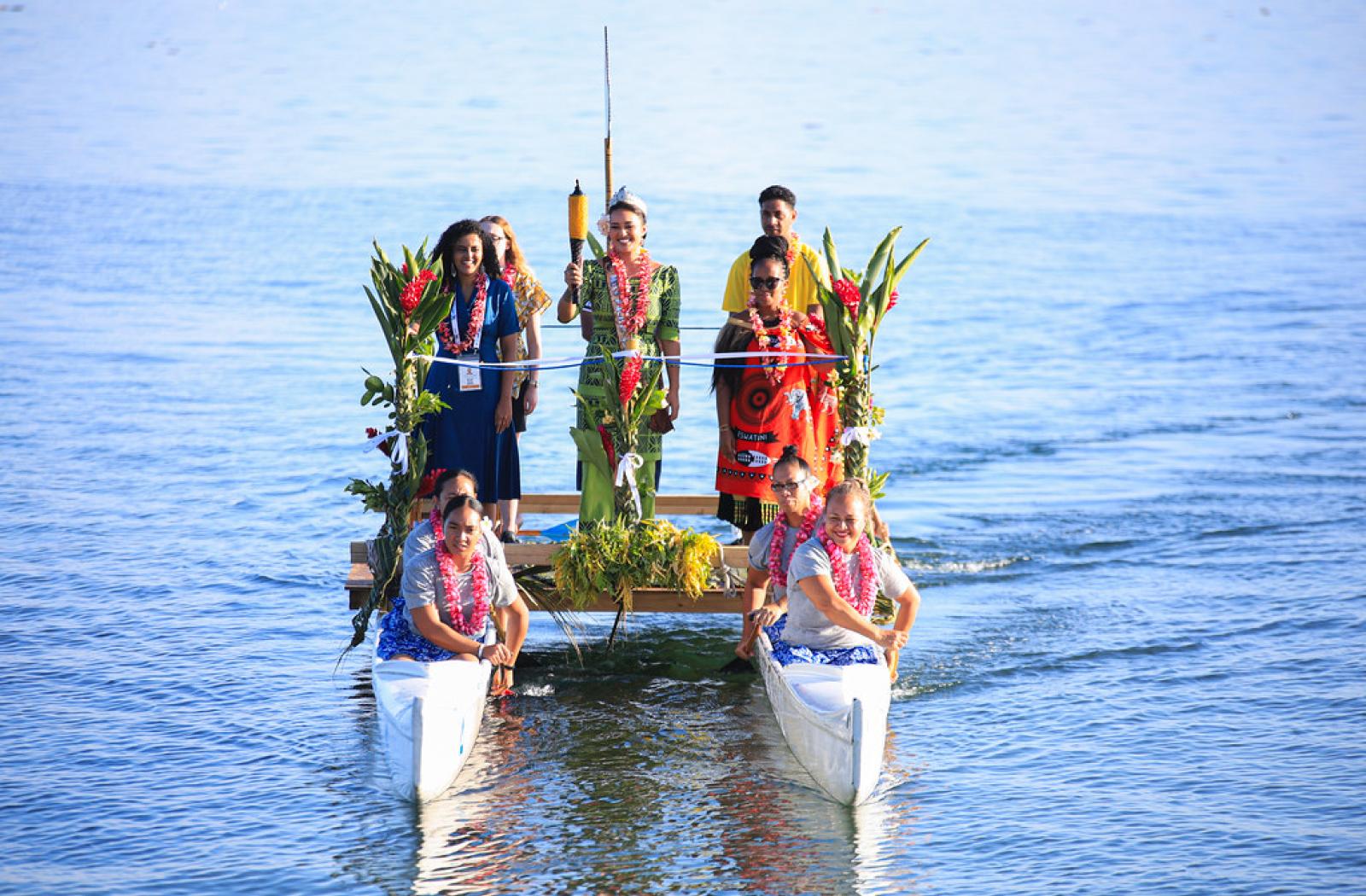
The Apia Commonwealth Ocean Declaration, adopted in October 2024 at the Commonwealth Heads of Government Meeting in Samoa, remains a beacon of collective ambition. Representing 56 nations that encompass one-third of the world’s population, more than one-third of global marine waters under national jurisdiction, half the world’s coral reefs, and vast expanses of mangroves, the Commonwealth is uniquely positioned to lead.
The Declaration confronts the triple crisis of climate change, pollution, and overexploitation head-on. It reaffirms commitments to UNCLOS, SDG 14, and the 30×30 targets—and, crucially, urges urgent ratification and implementation of the High Seas Treaty (the BBNJ Agreement).
This is no mere aspirational text. It calls for maintaining maritime boundaries amid sea-level rise, advancing a Global Plastics Treaty, developing sustainable blue economies, and harnessing nature-based solutions. By committing to biennial Ocean Ministers Meetings, it builds accountability mechanisms through the Commonwealth Blue Charter and related initiatives.
Yet declarations alone have too often washed ashore as empty promises. The true test lies in domestic action—specifically, the full embedding of the High Seas Treaty into national legal systems. Adopted in 2023 and entering into force on January 17, 2026, after reaching 60 ratifications, the BBNJ Agreement finally brings governance to nearly half the planet’s ocean areas beyond national jurisdiction.
Its importance cannot be overstated. The high seas have long been a legal wilderness: overfished, polluted, and vulnerable to unchecked exploitation of marine genetic resources and emerging activities like deep-sea mining. The Treaty equips the international community with tools for marine protected areas (MPAs), environmental impact assessments (EIAs), fair benefit-sharing from genetic resources, and capacity-building—especially vital for developing nations and Small Island Developing States (SIDS), which punch above their weight in ocean stewardship while bearing disproportionate burdens.
Ratification, however, is necessary but insufficient. International treaties bind states, yet their real power depends on integration into domestic law. In many legal systems—particularly the dualist common law traditions prevalent across the Commonwealth—treaties require explicit legislation to have domestic effect.
Without it, governments cannot effectively regulate flagged vessels, license research, enforce MPAs in international waters through national mechanisms, monitor compliance, or enable their citizens and companies to participate equitably in benefit-sharing or decision-making at the BBNJ Conference of the Parties.
Embedding the Treaty demands more than perfunctory bills. It requires harmonizing existing maritime, environmental, and fisheries laws; establishing or empowering national authorities; creating procedures for EIAs and MPA proposals; setting up monitoring, reporting, and enforcement regimes—including penalties for violations—and ensuring coordination with regional bodies.
It also involves investing in science, technology transfer, and capacity for developing members, turning equity provisions from rhetoric into reality. Countries like Australia have begun this work. The Commonwealth as a whole must accelerate it.
The Mombasa meeting offers the perfect platform. Ministers should commit to concrete timelines for domestic legislation where needed, share best practices through Commonwealth mechanisms, announce joint capacity-building initiatives, and pledge measurable contributions toward 30×30.
They must address the ocean-climate nexus with urgency—protecting blue carbon ecosystems, reducing shipping emissions, and building resilience for coastal communities. Africa’s voice, amplified in Mombasa, should highlight maritime security, sustainable fisheries, and innovative blue economy financing, while confronting local realities like pollution in host communities.
This is a moment of truth. The ocean’s decline accelerates: warming waters, acidifying seas, plastic-choked gyres, and biodiversity collapse threaten food security, livelihoods, and planetary stability. Commonwealth nations, with their diversity spanning developed and developing contexts, can model the collaborative, equitable leadership the world desperately needs.
The Apia Declaration and the now-in-force High Seas Treaty provide the compass. In Mombasa, ministers must set the course with ambition, accountability, and resources. Future generations—whose heritage and future hang in the balance—will judge whether the Commonwealth lived up to its name: a true common wealth of shared ocean prosperity and resilience. The waves are watching. The time for decisive, domestic, and collective action is now.