


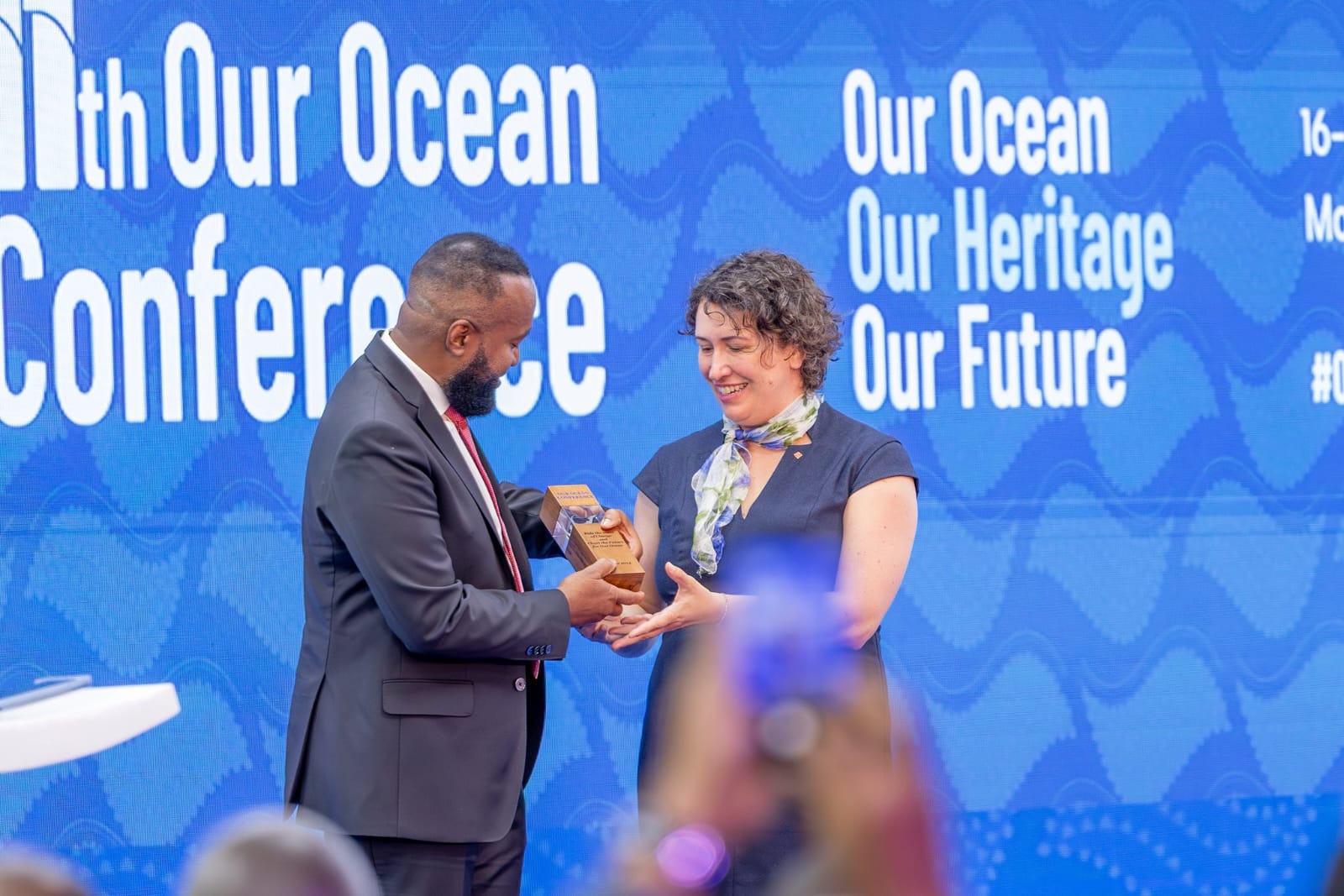
As the 11th Our Ocean Conference draws to a close in Mombasa, one truth echoes far beyond Kenya’s coastline: Africa is no longer requesting a seat at the table of global ocean governance—it is actively shaping the agenda.
For the first time since its launch in 2014, this premier ocean forum has been hosted on African soil. The symbolism is profound. Kenya and the broader continent now stand at the epicenter of global deliberations on ocean sustainability, maritime security, blue economy development, fisheries management, climate resilience, and marine conservation.
Yet beyond the ceremony lies a more urgent question: What tangible legacy will this conference leave for the millions whose daily survival depends on the sea?
From Global Pledges to Local Progress
The Our Ocean Conference has rightfully earned its reputation as one of the world’s most influential marine platforms. Since its inception, it has mobilized over 2,900 commitments valued at approximately US$169 billion—demonstrating a remarkable capacity to translate diplomatic dialogue into measurable action.
For Kenya, however, success cannot be measured by the scale of pledges announced. It must be measured in transformed lives:
· Better livelihoods for coastal communities
· Expanded opportunities for African seafarers
· Strengthened maritime security across the Western Indian Ocean
· Sustainable fisheries that safeguard both fish stocks and fishing families
· Increased investment in ports, shipping, and marine industries
· Enhanced resilience against climate change and marine pollution
The real test begins when delegates return home and the conference banners come down.
Kenya’s Rising Maritime Influence
Hosting this conference affirms Kenya’s growing stature in ocean governance and the blue economy. As home to the headquarters of the United Nations Environment Program and a champion of sustainable ocean development, Kenya has strategically positioned itself as a regional leader.
Significant investments in maritime infrastructure—the expansion of the Port of Mombasa, the development of the LAPSSET Corridor, and the enhancement of maritime training institutions—reflect this ambition. The conference offered an unprecedented platform to showcase these achievements while attracting partnerships to accelerate progress.
But leadership carries responsibility. Kenya must demonstrate that ocean conservation and economic development are complementary, not contradictory. A thriving blue economy depends on healthy marine ecosystems, just as conservation efforts must create opportunities for coastal populations rather than impose burdens upon them.
The Missing Voice: Seafarers
While conference discussions often focus on marine protected areas, climate finance, and biodiversity targets, one group remains consistently overlooked: seafarers.
The ocean economy runs on the backs of the world’s maritime workforce. Without seafarers, global trade would halt, supply chains would fracture, food security would falter, and energy transportation would be disrupted. Yet many continue to face abandonment, unpaid wages, criminalization, unsafe working conditions, and limited access to welfare services.
As Africa seeks a larger role in maritime affairs, it must champion the rights and welfare of those who power this industry. The blue economy cannot be built solely around ships, ports, and investments—it must prioritize the people who operate and sustain them.
The conference theme—”Our Ocean, Our Heritage, Our Future”—must therefore include a pledge to protect those whose lives are inseparable from the sea.
An African Agenda for Ocean Governance
Africa possesses more than 30,000 kilometers of coastline and millions of citizens whose livelihoods are directly tied to marine resources. Yet for decades, ocean governance discussions have been dominated by perspectives from Europe, North America, and Asia.
The Mombasa conference marked a decisive shift.
African priorities are distinct and urgent:
· Combating Illegal, Unreported, and Unregulated (IUU) fishing
· Expanding sustainable fisheries
· Developing maritime transport corridors
· Enhancing marine scientific research capacity
· Addressing coastal erosion and climate vulnerability
· Creating jobs for rapidly growing youth populations
The conference’s emphasis on youth leadership, scientific innovation, ocean finance, and private-sector investment reflects these priorities and underscores the continent’s determination to chart its own maritime future.
The Accountability Imperative
The greatest criticism of international conferences is not the quality of discourse but the implementation gap that inevitably follows. Commitments announced before television cameras must be tracked, funded, and delivered.
African nations have every right to insist on accountability. Communities confronting declining fish stocks, pollution, rising sea levels, and economic hardship cannot afford another decade of ambitious declarations without measurable results.
Fortunately, the Our Ocean Conference has cultivated a reputation for commitment tracking and outcome monitoring. This practice must be strengthened and expanded following the Mombasa gathering.
A Defining Legacy
The lasting significance of the 11th Our Ocean Conference will not be that it occurred in Africa. Its legacy will be determined by what happens next.
Will investments reach coastal communities? Will marine ecosystems receive meaningful protection? Will maritime jobs increase? Will seafarers benefit from stronger protections? Will African nations secure greater influence in global ocean governance?
These are the questions by which history will judge OOC11.
Mombasa has shown the world that Africa is ready to lead on ocean issues. The challenge now is ensuring that leadership translates into action—delivering a future where healthy oceans, prosperous coastal communities, and dignified maritime employment advance together.
Only then will “Our Ocean, Our Heritage, Our Future” become more than a conference slogan. It will become a shared reality for generations to come.
Andrew Mwangura is a maritime affairs analyst based in Mombasa, Kenya.