


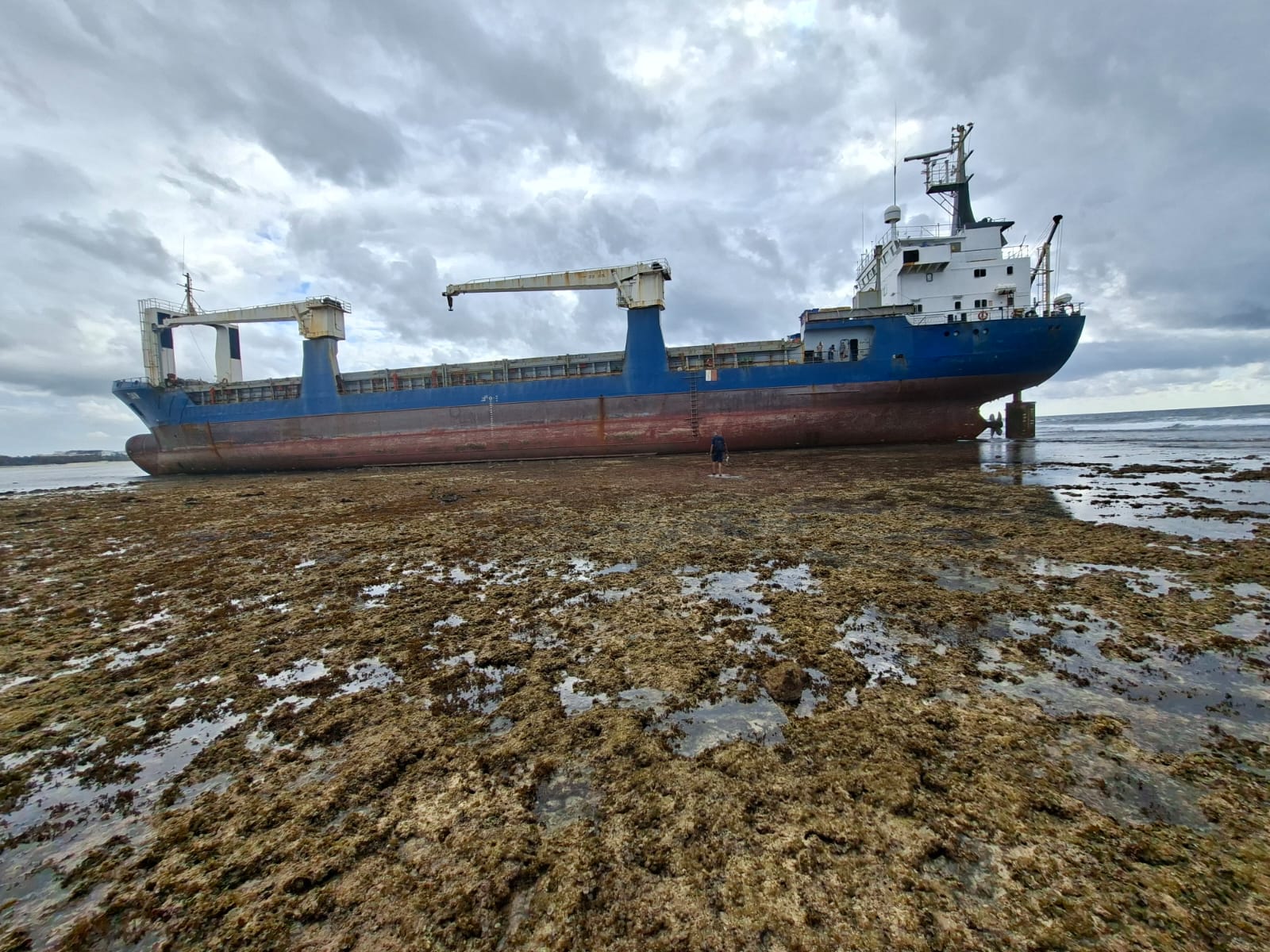
The Kenya Maritime Authority’s (KMA) press release of 22 June 2026 offers a measured and reassuring update on the M.V. DAN (IMO 8415160), a vessel that remains aground off Nyali Beach in Mombasa. For a nation whose economic vitality and cultural identity are deeply tied to the Indian Ocean, such incidents are far more than logistical disruptions—they are stress tests of our maritime governance, environmental stewardship, and crisis readiness. On balance, the Authority’s communication and the multi-agency response appear professional and proactive. Yet the situation also invites deeper reflection on preparedness, accountability, and the long-term resilience of Kenya’s blue economy.
The encouraging news is substantial. According to the KMA, the vessel’s hull integrity remains intact, with no evidence of structural failure or leakage. The likelihood of a pollution incident is currently assessed as minimal, and precautionary measures are firmly in place. A coordinated team—comprising the KMA, Kenya Coast Guard Service, Kenya Navy, Kenya Ports Authority, and other stakeholders—is maintaining round-the-clock monitoring. The vessel owners, M/S Maritime Co. S.A., have reaffirmed their commitment to refloating and salvage operations, with preparations reportedly advancing toward a target window around 13 July 2026. This level of inter-agency collaboration and owner accountability is commendable and stands in stark contrast to past regional maritime incidents, where confusion, delayed communication, or finger-pointing often exacerbated damage.
Nyali Beach is not merely a scenic tourist attraction; it is part of a vibrant coastal ecosystem that supports fisheries, tourism, and local livelihoods. The absence of reported oil spills or cargo leakage so far is therefore a significant relief. The KMA’s emphasis on crew welfare, navigational safety, and environmental protection signals a welcome shift toward holistic maritime risk management—rather than a narrow focus on vessel recovery alone. In an era of increasing shipping traffic, climate-driven extreme weather, and aging fleets, such vigilance is not optional; it is essential.
That said, an editorial must probe beyond reassuring language. Groundings in sensitive near-shore areas like Nyali inevitably raise questions about how the vessel ended up there in the first place. Was it mechanical failure, human error, adverse weather, or inadequate pilotage and navigational aids? While the press release understandably prioritizes current status and response efforts, Kenyans deserve fuller transparency on the root causes once investigations conclude. Public trust in maritime authorities depends not only on competent crisis management but also on rigorous post-incident accountability. The KMA should commit to publishing a comprehensive incident report in due course, ideally including independent technical analysis.
Economically, the grounding—though currently contained—disrupts local maritime traffic, tourism activities, and potentially fishing grounds. Mombasa remains East Africa’s premier port; any perception of vulnerability in its approaches can affect investor confidence and insurance premiums for vessels calling at the port. The planned refloating around mid-July provides a clear timeline, but contingencies must be robust. What if weather conditions deteriorate? Are salvage resources—tugs, equipment, and expertise—readily available and adequately insured against further complications? The involvement of the vessel owners is positive, but Kenyan authorities must ensure that any costs to the public purse or environmental remediation are fully recovered where liability is established.
This episode also highlights broader systemic issues. Kenya has made strides in maritime security and blue economy development, yet incidents like this underscore the urgent need for sustained investment in modern navigational infrastructure, regular vessel traffic monitoring, enhanced pilot training, and stricter enforcement of international maritime conventions (SOLAS, MARPOL, and others). Climate change is altering weather patterns and sea states; our preparedness must evolve accordingly. Coastal communities, environmental NGOs, and tourism operators should be kept in the loop through transparent briefings, not left to speculate based on partial information.
The KMA’s closing note—that it “remains satisfied with the cooperation demonstrated by the vessel owners and all agencies involved”—is encouraging. Effective public-private and inter-agency partnership is precisely what turns potential disasters into manageable events. However, satisfaction must not breed complacency. The true test will be the successful, environmentally sound refloating of the M.V. DAN and the implementation of lessons learned to prevent recurrence.
Kenya’s maritime future is too important to treat such incidents as routine. With the right blend of transparency, technical competence, and forward-looking policy, the M.V. DAN grounding can become a case study in effective response rather than a cautionary tale of near-miss vulnerability. The KMA and its partners have earned cautious praise for their handling thus far. Now they must convert that into lasting improvements for the safety of our waters, the protection of our coastline, and the strength of our blue economy. Kenyans—and the global maritime community—are watching.