


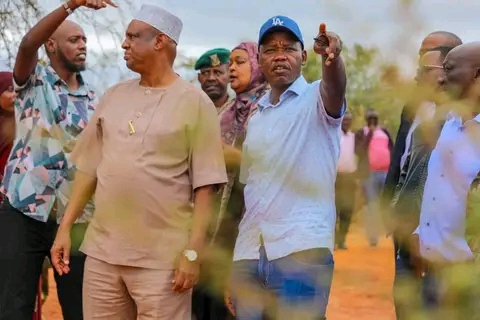
For decades, Northern Kenya has been defined by its paradox: vast, resource-rich landscapes shackled by isolation, underdevelopment, and disconnection from the nation’s economic mainstream. The Lamu Port-South Sudan-Ethiopia Transport (LAPSSET) Corridor—one of Africa’s most audacious infrastructure gambits—was designed to shatter these barriers. Yet, a grand vision requires granular execution. The recent initiatives by the Kenya Ports Authority (KPA), in partnership with the Marsabit and Turkana county governments, to establish a dry port in Moyale and introduce ferry services on Lake Turkana are not merely incremental upgrades. They are the strategic catalysts required to transform LAPSSET from a blueprint into a lifeline.
These projects, advanced through site assessments in Loiyangalani and Moyale as of mid-2026, are the operational heart of LAPSSET’s core mandate: building a resilient multimodal network that connects Kenya’s coast to the hinterlands of the Horn of Africa, spurring inclusive growth, and fostering genuine regional integration.
Solving the Hinterland Bottleneck
A dry port in Moyale is far more than a parking lot for trucks; it is an inland extension of Lamu Port’s economic zone. By handling customs clearance, cargo consolidation, and distribution closer to the Ethiopian border, Moyale would replicate the success of facilities like Naivasha—decongesting seaports, slashing demurrage costs, and drastically lowering logistics expenses.
For Marsabit and the wider region, this transforms a peripheral border town into a strategic nerve center. Goods from Lamu or Mombasa would flow seamlessly into Ethiopia, while Ethiopian exports—livestock, agricultural produce, and minerals—would gain frictionless access to global markets. This efficiency reduces the prohibitive costs of road hauls, shrinks transit times, and ignites cross-border commerce. In a region where high transport costs routinely kill business competitiveness, this infrastructure is the difference between survival and growth.
Complementing this, the Lake Turkana ferry service—linking Loiyangalani to Kalokol and Eliye Springs—offers a game-changing multimodal pivot. Currently, circumventing the lake is a logistical nightmare that consumes hours and drains resources. A reliable ferry service for passengers and cargo would slash travel times to 1-2 hours, fundamentally reshaping mobility between the counties. It integrates the lake’s rich fisheries and tourism potential into the LAPSSET grid and breathes life into the resort city plans envisioned for the corridor.
The synergy is clear: cargo arrives at Lamu, moves inland via road or rail to the dry port, crosses the lake via ferry, and feeds into highways and future rail links heading toward South Sudan and Ethiopia. This is not just a route; it is a logistics ecosystem.
Economic Transformation and Regional Integration
The economic case is irrefutable. LAPSSET is designed to open up northern Kenya—home to millions who have long been sidelined from national prosperity. The Moyale dry port and Turkana ferries are engines of direct and indirect employment, generating jobs in construction, operations, hospitality, and logistics. They will invigorate local economies by increasing trade volumes, reducing operational costs, and unlocking value chains—from pastoralist livestock exports to fisheries and agribusiness.
Regionally, these projects anchor Kenya’s commitment to its landlocked neighbors, Ethiopia and South Sudan. By enhancing supply chain resilience, Kenya solidifies its position as East Africa’s premier logistics gateway. In the era of the African Continental Free Trade Area (AfCFTA), these links are indispensable for turning geographic proximity into tangible economic reality.
Furthermore, the environmental dividend is significant. A functional multimodal system—integrating road, rail, and water transport—reduces congestion and lowers carbon emissions per ton-kilometer compared to the exclusive reliance on trucks. When executed with robust community engagement, these projects can empower local populations, improve access to essential services, and redress the inequalities that have historically fueled regional marginalization.
Overcoming the Skeptics with Grit and Good Governance
Cynics will point to LAPSSET’s history of delays, security volatility, funding gaps, and broken timelines. These are legitimate concerns, but they are not death sentences. The current momentum—marked by concrete site assessments, gubernatorial collaboration, and alignment with national priorities—represents a credible reset.
Success requires a disciplined approach: transparent public-private partnerships, rigorous environmental safeguards, community benefit-sharing agreements, and the integration of security enhancements to protect these strategic assets. Prioritizing these projects within LAPSSET’s phased rollout is critical. Feasibility studies must be expedited, financing must be secured (potentially through development partners), and operations must be designed to withstand the harsh realities of climate variability around the lake and complex border dynamics.
A Call to Action for Kenya’s Future
Establishing the Moyale dry port and Lake Turkana ferry services is not simply an infrastructure undertaking; it is an act of nation-building. It is a defiant statement that Northern Kenya is not a periphery to be pitied, but an engine to be powered.
These initiatives will decongest our ports, slash systemic costs, create jobs, integrate fractured markets, and solidify Kenya’s role as the anchor of regional trade. As the Kenya Ports Authority and county leaders advance these plans, a united front is required. Government, private sector, and local communities must rally behind this vision with unwavering resolve.
The arid north holds untapped potential. With these critical pieces of the LAPSSET puzzle in place, it can flourish as a vibrant corridor of commerce, connectivity, and opportunity. The time for cautious deliberation is over. The time for bold, sustained action is now—because Kenya’s equitable and prosperous future depends on it.