


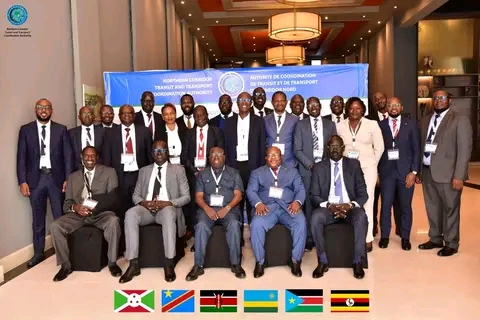
This gathering of representatives from six Member States is far more than a routine administrative exercise. It is a pivotal opportunity to assess the efficacy of policies, infrastructure investments, and trade facilitation measures that directly shape the region’s competitiveness. The corridor serves as the principal gateway linking the Port of Mombasa to the hinterland markets of Uganda, Rwanda, Burundi, South Sudan, and eastern Democratic Republic of Congo. Millions of livelihoods, enterprises, and industries depend on its fluid operation.
For decades, the Northern Corridor was viewed primarily as a transport route. Today, it must be understood as an integrated economic ecosystem—one where roads, railways, ports, border posts, logistics hubs, digital platforms, and maritime services function as interconnected components of a regional development framework. The performance of each element directly affects the whole.
The Executive Committee’s focus on reviewing achievements and confronting emerging challenges is therefore both timely and indispensable. While considerable progress has been made in reducing transit times, modernizing customs procedures, and upgrading infrastructure, persistent bottlenecks continue to erode efficiency. Non-tariff barriers, inconsistent regulatory frameworks, maintenance deficits, and administrative delays still inflate the cost of doing business across the region.
Every hour lost at a border crossing, every redundant inspection, and every procedural inconsistency translates into higher costs for traders and consumers. These inefficiencies ultimately weaken the region’s global competitiveness. The Committee’s deliberations must therefore move beyond problem identification and concentrate on implementing measurable solutions that deliver tangible outcomes.
Particularly noteworthy is the consideration of the FY 2026/2027 Budget and Work plan. Budgetary decisions within regional institutions often determine whether strategic ambitions translate into practical results. Adequate investment in transport infrastructure, trade facilitation systems, digital integration, and capacity building will be essential if the Northern Corridor is to retain its position as East Africa’s premier trade gateway.
The corridor’s future also hinges decisively on technology. Digital customs platforms, cargo tracking systems, electronic single-window mechanisms, and integrated border management have already demonstrated their capacity to reduce delays and enhance transparency. The next phase of development must prioritize deeper digital harmonization among Member States to create a genuinely seamless trading environment.
From a maritime perspective, the corridor’s efficiency begins at sea. The Port of Mombasa remains its primary maritime gateway and ranks among Africa’s fastest-growing ports. Investments in port modernization, vessel turnaround efficiency, cargo handling capacity, and hinterland connectivity are therefore investments in regional prosperity. The synergy between maritime transport and inland logistics must be further strengthened to ensure uninterrupted cargo flow from ship to final destination.
Equally important is the human dimension of corridor development. Transport and logistics are ultimately powered by people—truck drivers, seafarers, freight forwarders, customs officers, port workers, railway operators, and logistics professionals. As Member States pursue modernization and automation, they must simultaneously invest in skills development and workforce readiness. A modern corridor requires a modern workforce capable of operating within increasingly sophisticated systems.
The Executive Committee’s role in providing strategic oversight cannot be overstated. Regional integration succeeds when political commitment is matched by institutional coordination. The Permanent Secretaries and senior officials serving on the Committee occupy a unique position from which they can bridge national priorities with regional objectives. Their leadership is essential in ensuring that policy commitments translate into operational realities on the ground.
Yet the broader significance of the Northern Corridor extends far beyond trade statistics. It is a powerful instrument for regional integration, economic inclusion, and shared prosperity. Efficient transport corridors encourage investment, stimulate industrialization, create employment, and strengthen economic ties among neighbours. In an era when regional blocs are increasingly becoming engines of growth, the Northern Corridor offers East Africa a practical model of cooperation and collective development.
As the 61st Executive Committee Meeting deliberates on the future direction of corridor programs and initiatives, stakeholders across the region will be watching closely. The decisions made today will influence trade flows, investment opportunities, and economic growth trajectories for years to come.
The challenge before the Committee is clear: to transform the Northern Corridor from a transport route into a world-class economic corridor that underpins regional competitiveness, facilitates the seamless movement of goods and people, and positions East Africa as a leading trade and logistics hub on the global stage.
Ultimately, the future of regional integration in East Africa will not be measured by agreements signed or meetings convened. It will be measured by the speed with which goods move, the efficiency of border crossings, the competitiveness of regional industries, and the prosperity experienced by the citizens who depend on the corridor every day. The 61st Executive Committee Meeting represents another important step toward realizing that vision.
Ends.