


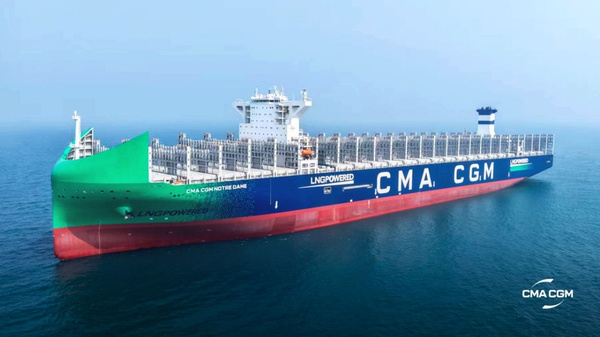
That era is now ending.
By the close of 2027—or perhaps as early as mid-2026, according to Linerlytica—CMA CGM is poised to dethrone Maersk from second place, relegating the Danish giant to third. Mediterranean Shipping Company (MSC) has already cemented its position as the industry’s undisputed heavyweight. Yet the impending reversal between the French challenger and the Danish incumbent is the more revealing spectacle—a strategic realignment that signals the end of one governing philosophy and the ascendance of another.
This is not a random twist of market fate. It is the logical outcome of two starkly divergent corporate creeds. One chose restraint and integration; the other chose expansion without apology. For the moment, the market is rewarding the bolder bet.
A Self-Inflicted Decline
Linerlytica founder Hua Joo Tan delivered the verdict with characteristic bluntness: “Maersk’s fall in the rankings is entirely self-inflicted.”
Harsh, perhaps. But accurate.
Under CEO Vincent Clerc, Maersk deliberately withdrew from the race for fleet supremacy, placing its faith instead in a long-term vision of becoming a fully integrated logistics provider—an orchestrator of end-to-end supply chains spanning ocean, air, warehousing, and digital services. It was an intellectually elegant strategy, predicated on the belief that escaping the volatility of container shipping would yield stable, diversified earnings.
But while Maersk was busy reinventing itself as a logistics integrator, CMA CGM was quietly executing a different playbook. Under Rodolphe Saadé, the French carrier expanded its fleet aggressively while simultaneously deepening its investments in terminals, air cargo, inland transport, and strategic acquisitions. CMA CGM refused to choose between shipping and logistics; it built both.
The results are now unmistakable.
As Hua Joo Tan argues, the superior margins of ocean shipping continue to fuel competitors’ expansion. By capping its fleet growth, Maersk has effectively ceded both cargo volumes and future earnings potential to rivals eager to absorb them. The thesis that integration alone can compensate for shrinking fleet relevance is increasingly colliding with market reality. In container shipping, scale still commands a premium.
The Politics of Scale
For Rodolphe Saadé, claiming the number-two slot is about more than corporate vanity. It marks the spectacular rehabilitation of a family-controlled French carrier that, after the 2008 financial crisis, faced existential uncertainty. Today, CMA CGM stands on the verge of eclipsing one of the industry’s most storied institutions.
The symbolism is potent. But the commercial calculus is even more compelling.
In global freight procurement, scale confers negotiating leverage, network resilience, and shipper confidence. Occupying second place strengthens CMA CGM’s hand in contract negotiations and reinforces its credibility as a global logistics partner.
Yet jubilation in Marseille may be premature.
Peter Sand of Xeneta cautions that the reshuffled hierarchy could be fleeting. China’s COSCO Shipping, backed by state resources and one of the industry’s largest orderbooks, is advancing steadily. Should those vessels materialise as scheduled, today’s realignment may prove to be merely a prelude to an even more profound reordering of the liner landscape. Maersk’s fall to third may not be the end of its troubles, but the beginning of a far more competitive era.
Preparing for the Next Storm
Before anointing CMA CGM as the industry’s new lodestar, we must confront a sobering reality. Sea-Intelligence CEO Alan Murphy reminds us that container shipping remains stubbornly cyclical, and the current orderbook promises a tidal wave of new capacity.
History shows that aggressive fleet expansion becomes a liability when freight demand falters. In a downturn, size without discipline is a weight, not a weapon. A larger fleet demands relentless cargo fill, surgical capacity management, and the financial fortitude to endure prolonged rate depressions.
Ironically, Maersk’s more restrained posture—prioritising profitability, operational efficiency, and value-added logistics over sheer volume—may yet prove to be the more durable strategy if the industry sails into stormier waters. Losing the ranking may bruise corporate pride, but preserving financial discipline could ultimately reward the patient shareholder.
The Real Contest
The convenient narrative that “size no longer matters” is usually advanced by those who once wielded it. Maersk increasingly resembles the Apple of shipping: focused on integration, user experience, and premium service. CMA CGM, by contrast, is modelling itself as the Amazon of maritime logistics—constructing an ecosystem that spans ships, ports, air freight, warehousing, and inland haulage, all while continuing to grow its core fleet.
Both strategies carry undeniable logic.
Over the next 12 to 18 months, CMA CGM will almost certainly win the battle for second place. Whether it ultimately wins the larger strategic war is far less certain.
The future titans of container shipping will not be crowned by fleet rankings alone. They will be those who navigate volatility with resilience, invest with discipline across cycles, and preserve the trust of global shippers through calm and crisis alike.
For now, the crown is passing from Copenhagen to Marseille.
Yet shipping history offers one immutable truth: no crown in maritime commerce rests easily for long.
Andrew Mwangura is a Mombasa-based Public Intellectual and Maritime Affairs Analyst.