


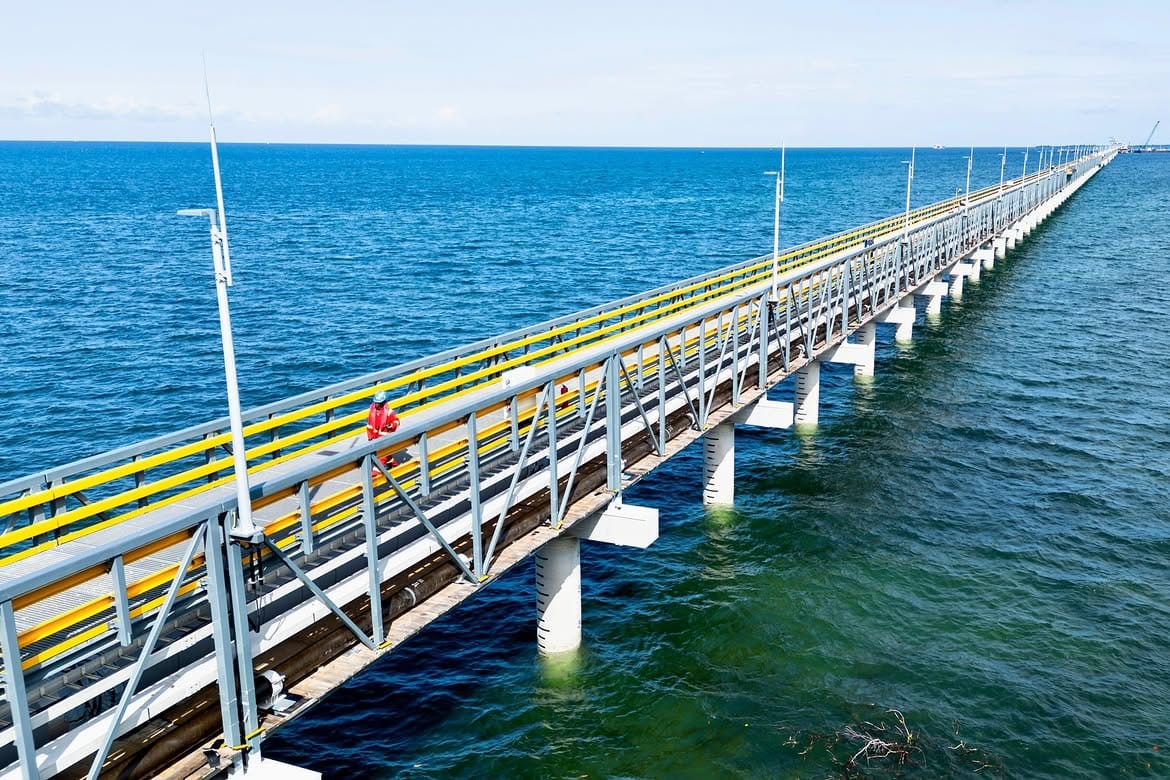
As the final welds are completed on the 1,443-kilometre East African Crude Oil Pipeline (EACOP), East Africa stands at a defining moment in its economic history. With commercial exports expected to commence in October, Uganda is finally poised to join the ranks of oil-producing nations—nearly two decades after commercially viable reserves were first discovered beneath the Albertine Graben.
There is no denying the scale of this achievement. Stretching from Uganda’s Lake Albert oilfields to the Tanzanian Port of Tanga, EACOP is the world’s longest electrically heated crude oil pipeline—an extraordinary engineering feat designed to transport Uganda’s waxy crude efficiently to international markets. It is the flagship project of a regional energy vision that has demanded immense political commitment, financial investment and technical innovation.
Yet, as the countdown to “first oil” gathers momentum, East Africa must resist the temptation to measure success solely in barrels exported or revenues earned. The more consequential question is this: what kind of legacy will this project ultimately leave behind?
From an economic perspective, the case for EACOP is persuasive. The pipeline is expected to transport more than 200,000 barrels of crude oil per day, granting landlocked Uganda direct access to global energy markets while reinforcing Tanzania’s strategic position as an emerging energy transit corridor. The project has attracted billions of dollars in investment from industry heavyweights such as TotalEnergies and CNOOC, while generating thousands of direct and indirect employment opportunities across both countries.
Unlike many resource-rich nations that rushed headlong into production, Uganda has consistently argued that its slower approach reflects deliberate planning rather than hesitation. Investments in institutional capacity, regulatory frameworks and domestic refining infrastructure signal an ambition to maximise long-term value rather than chase short-term profits. Equally significant is the political achievement: Uganda and Tanzania have sustained an ambitious cross-border partnership through years of financial uncertainty, geopolitical pressure and volatile global oil markets. In many respects, EACOP stands as a testament to regional cooperation and African-led infrastructure development.
However, economic ambition cannot erase legitimate concerns—and it is here that the project’s legacy becomes far more complicated.
The pipeline has become one of Africa’s most controversial infrastructure projects precisely because it embodies the difficult choices confronting developing economies in an era of climate transition. Environmental organisations have consistently warned that sections of the pipeline traverse ecologically sensitive landscapes, including protected wildlife habitats and biodiversity hotspots that sustain endangered species such as chimpanzees and the eastern black rhinoceros. Beyond biodiversity, millions of people depend on these same ecosystems for agriculture, fishing and water resources.
The climate implications are equally stark. Estimates suggest that oil produced through the project could generate tens of millions of tonnes of carbon emissions annually throughout its operational lifetime. At a time when the world is accelerating towards cleaner energy systems, East Africa faces the unenviable challenge of balancing its legitimate development aspirations with growing international expectations regarding climate responsibility.
Equally troubling are the unresolved social consequences.
Behind the impressive engineering statistics lies a more complicated human story. Civil society organisations estimate that well over 100,000 people have been affected by land acquisition associated with the project. While project developers maintain that the overwhelming majority of land transactions were concluded through mutual agreement and compensation mechanisms, numerous affected communities continue to raise concerns regarding delayed payments, undervalued property, disrupted livelihoods and inadequate consultation.
The dismissal of legal proceedings before the East African Court of Justice on procedural grounds may have closed one chapter of litigation, but it has not resolved the underlying grievances of communities who continue to feel excluded from the benefits of a project built across their ancestral lands. These concerns cannot simply be dismissed as the inevitable costs of development. They represent a social debt that will continue to shape public perceptions long after the first tanker departs the Port of Tanga.
The next phase of East Africa’s oil story, therefore, demands leadership of a different kind.
The true measure of success will not be determined by export volumes or government revenues alone. It will depend on whether petroleum wealth is transformed into lasting public value through investments in education, healthcare, infrastructure, industrialisation and economic diversification. It will depend on whether transparency, accountability and sound governance prevent the familiar resource curse that has undermined so many oil-producing nations before.
Likewise, commitments to operate the pipeline using predominantly renewable electricity—including significant solar-generated power—should be viewed as a welcome beginning rather than a complete solution. They must form part of a broader strategy that prepares East Africa for an inevitable global transition towards lower-carbon economies.
EACOP has laid a technically impressive foundation for a new petroleum industry. Whether it also lays the foundation for sustainable prosperity remains an open question—one that will be answered not in boardrooms or government offices, but in the lived experiences of the people whose lives the pipeline touches.
History will not judge this project by the sophistication of its engineering or the length of its steel. It will judge whether the wealth generated improves the lives of ordinary citizens, safeguards the region’s extraordinary natural heritage, and strengthens the institutions upon which future generations will depend.
East Africa’s oil dream is no longer a distant aspiration. It is becoming reality.
The real test begins now.