


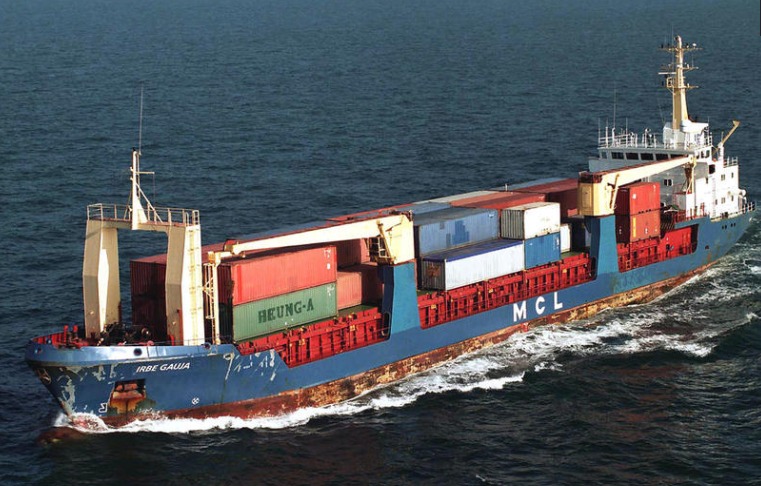
For nearly three months, the rusting silhouette of the MV Dan loomed large off Nyali Beach—a stark reminder of the thin line between routine maritime commerce and environmental catastrophe. The Tanzanian-flagged, Turkish-owned general cargo vessel, built in 1985 and measuring roughly 99 metres with a deadweight of about 4,900 tonnes, ran aground in mid-May 2026 while en route from Tanzanian waters to Mombasa for bunkering. Positioned perilously close to the sensitive ecosystems of the Mombasa Marine National Park and its coral reefs, the ship became an unwelcome fixture on the horizon—drawing public curiosity, environmental anxiety, and official scrutiny.
That chapter has now closed successfully. The salvage operation, executed by Mombasa-based Yaa Holdings Limited with the skilled hands of Kenyan seafarers, has refloated the vessel without the catastrophe many feared. This outcome is more than a technical achievement. It is a quiet but powerful affirmation of Kenya’s growing maritime capability, the professionalism of its regulatory institutions, and the competence of its coastal workforce.
A coordinated response from the start
From the outset, the response was orderly and coordinated. The Kenya Maritime Authority (KMA), working alongside the Kenya Coast Guard Service, Kenya Navy, and Kenya Ports Authority, established a multi-agency presence almost immediately. Coast Guard officers maintained round-the-clock security aboard the vessel, protecting the 16 crew members and four private security personnel while deterring unauthorised access and vandalism. Technical inspections confirmed the hull remained intact, with no fuel leaks or structural failures. Fuel was transferred to upper tanks as a precaution, and pollution risk was assessed as minimal—an assessment that held firm throughout the grounding.
The owners, SLA Maritime (also referred to as SLM Maritime), cooperated fully and ultimately appointed Yaa Holdings Limited as the salvage contractor. Earlier windows for refloating, including a hoped-for mid-July high-tide opportunity, slipped amid the practical challenges of securing specialised equipment and completing regulatory reviews. The operation was deliberately timed for the more favourable conditions of mid-August. When the moment arrived, local expertise delivered. Kenyan seafarers, operating under a Mombasa-based company, executed the complex work of freeing a vessel lodged near coral in an environmentally sensitive zone. The result was a clean recovery that protected both the ship and the marine environment it had threatened.
A milestone for local maritime capability
This success carries significance far beyond the immediate relief of seeing the vessel under way again. For too long, major salvage and specialised maritime interventions off East African coasts have defaulted to foreign contractors. The MV Dan operation demonstrates that Kenya possesses the institutional framework, regulatory seriousness, and homegrown technical capacity to handle demanding marine emergencies. Yaa Holdings and the Kenyan crews who carried out the work have shown that local companies can meet international standards of safety, environmental care, and operational effectiveness. That demonstration strengthens the case for greater investment in local maritime skills, equipment, and enterprise.
Equally important is what did not happen. No oil spill fouled Nyali’s beaches or the protected waters of the marine park. Tourism, fishing communities, and fragile coral ecosystems were spared the long-term damage that a major pollution event would have inflicted. In an era of intensifying climate pressures and growing shipping traffic along the Western Indian Ocean corridor, this outcome underscores the value of preventive vigilance and rapid, competent response. The KMA’s measured public communication and insistence on proper approvals and environmental safeguards set a professional tone that other regional authorities would do well to emulate.
The lessons that must follow
Yet celebration must be tempered with reflection. The grounding of an ageing vessel near a protected marine area exposes enduring vulnerabilities in global shipping: opaque ownership structures, the continued operation of older tonnage with histories of deficiencies, and the risks that accompany commercial traffic in ecologically sensitive zones. Once the MV Dan is fully inspected in port, authorities should pursue a transparent accounting of the causes and any lessons for navigational practice, vessel condition standards, and contingency planning. A successful salvage closes the operational emergency; it should open a serious policy conversation about accountability and prevention.
Kenya’s coastline is both an economic artery and a natural treasure. The successful recovery of the MV Dan by a Mombasa company and Kenyan seafarers proves that the country can protect both. It is a moment of earned pride—for the regulators who maintained steady oversight, for the company that took on the contract, and above all for the seafarers whose skill and discipline turned a prolonged grounding into a clean resolution. May this achievement become a benchmark rather than an exception, and may it encourage the further development of local maritime capacity that Kenya’s blue economy so clearly requires.