


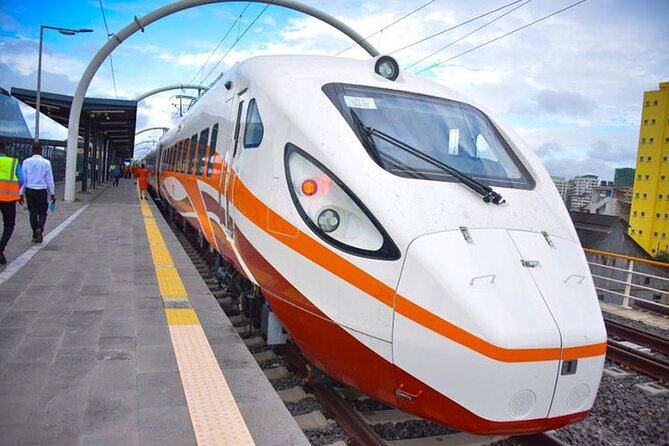
In an era when African infrastructure headlines are dominated by fanfare, delays, or debt controversies, Tanzania is executing one of the continent’s most consequential transport projects with remarkable understatement. Under President Samia Suluhu Hassan, the Standard Gauge Railway (SGR) is advancing steadily toward a network exceeding 2,000 kilometres of electrified track—positioning it as the longest electric railway system in Africa once fully realised. Lot 5, the critical Isaka–Mwanza section, has reached nearly 70 percent completion. The ultimate vision extends beyond domestic connectivity: a transformative Central Corridor linking the Democratic Republic of Congo, Rwanda, and Burundi to the Port of Dar es Salaam. Electric trains are already reshaping mobility within Tanzania; the full project promises to redefine regional logistics.
From Vision to Steel: The Scale and Progress
Launched in 2017, Tanzania’s SGR replaces and parallels the ageing metre-gauge Central Line with a modern 1,435 mm standard-gauge, 25 kV electrified system designed for passenger speeds of up to 160 km/h and freight at 120 km/h. Phase One aims to connect Dar es Salaam to Mwanza on Lake Victoria—approximately 1,230 kilometres across five lots. Lots 1 and 2 (Dar es Salaam–Morogoro–Makutupora near Dodoma), totalling around 722 kilometres, have been operational since 2024. Passenger services have already carried millions, and freight operations commenced in 2025.
Lot 5 (Isaka–Mwanza), spanning roughly 341 kilometres, reached 68 percent completion by early 2026, with bridges and culverts at over 90 percent. Officials project readiness for public use by 2028, enabling continuous electric services from the Indian Ocean to Lake Victoria. Financing has been secured through a mix of Chinese support (Sinosure-backed facilities for Lot 5) and European export credit agencies arranged via Standard Chartered for earlier sections. Recent deals, including over $1.28 billion for Lots 3 and 4 (Makutupora–Isaka), underscore sustained momentum.
Beyond Mwanza, Phase Two extends westward: the Tabora–Kigoma section (about 506 km) saw its official groundbreaking in mid-2026 under President Hassan, with construction already underway and targeting 2030. Cross-border links to Burundi (Uvinza–Musongati) and further ambitions toward eastern DRC are advancing through joint planning and African Development Bank support. The planned total network—approaching 2,500–2,800 kilometres including spurs—will indeed rank among Africa’s longest continuous electrified systems, surpassing many peers in modernity and regional reach.
Transforming Time, Cost, and Carbon
The human and economic impact is already measurable. On operational sections, journeys that once took 8–12 hours by road or older rail have been dramatically cut—Dar es Salaam to Dodoma now takes around 3.5 hours. For the full Dar–Mwanza corridor, the projected reduction from roughly 18 hours by road to about 7 hours by electric train is transformative for passengers, businesses, and supply chains. Freight capacity is designed for millions of tonnes annually, shifting bulk cargo—minerals, agricultural produce, fuel, containers—from congested roads to rail. This lowers vehicle operating costs, reduces accidents, eases road maintenance burdens, and cuts fuel consumption and emissions substantially.
Dar es Salaam Port, already a key gateway for landlocked neighbours, stands to gain enormously. The DRC is among its largest users; efficient rail links through Burundi and onward will compress transit times dramatically, from multi-day truck journeys to single-day rail in some projections. Rwanda is actively deepening ties along the Central Corridor, including discussions of an Isaka–Kigali extension. Lower logistics costs enhance competitiveness for coffee, minerals, cocoa, and other exports while reducing import prices. Job creation during construction—thousands per section—and long-term operations further amplify the multiplier effects.
Silent Strategy, Strategic Ambition
President Samia Suluhu Hassan’s approach stands out for its pragmatism. Succeeding a more high-profile predecessor, she has prioritised continuity, financing closure, and steady execution over spectacle. Groundbreakings, financing announcements, and operational launches occur without excessive fanfare, yet the cumulative result is tangible: operational electric services, advancing lots, diversified funding (Chinese, European, and domestic), and explicit regional diplomacy. In speeches and bilateral meetings, she frames the SGR not as a prestige project but as an “economic corridor” for industrialisation, agriculture, and trade—aligning with Tanzania’s longer-term development vision and the East African Community’s broader railway master plan.
This quiet competence matters. Many African mega-projects falter on financing gaps, contractor disputes, or political discontinuity. Tanzania has navigated rainy-season delays, cost pressures, and complex multi-lot sequencing while keeping the core timeline credible. The choice of electrification—powered increasingly by expanding hydropower capacity—positions the network for lower operating costs and climate alignment, distinguishing it from diesel-dependent systems elsewhere.
Challenges and the Road Ahead
No project of this scale is risk-free. Remaining sections require sustained financing discipline and execution quality. Regional extensions depend on neighbour coordination, border processes, and complementary investments (ports, dry ports, last-mile links). Freight utilisation must ramp up to justify capital outlay; passenger demand has been strong, but cargo volumes will determine long-term viability. Debt sustainability, environmental and social safeguards, and local content and skills transfer remain areas for vigilance. Completion of the full Dar–Mwanza spine by around 2028, followed by western and cross-border links toward 2030, will test institutional capacity.
Yet the trajectory is clear. What began as a national modernisation effort is evolving into a regional backbone. By connecting the Great Lakes economies to the Indian Ocean via efficient, electric rail, Tanzania is turning geography into comparative advantage. In a continent still constrained by infrastructure deficits that inflate trade costs and fragment markets, this is not incremental progress—it is structural change.
President Hassan’s government is proving that transformative infrastructure need not be loud. Steel is being laid, trains are running, and a new logistics map of East and Central Africa is taking shape. When electric trains eventually glide from Dar es Salaam to Mwanza in seven hours and onward toward the borders of Rwanda, Burundi, and the DRC, the quiet work of the past years will speak loudly enough. Africa’s longest electric railway corridor will not just move people and goods; it will accelerate the integration and prosperity the continent has long sought.
Andrew Mwangura is a maritime and transport analyst based in Mombasa, Kenya. He has extensive experience in African logistics, maritime security, maritime education and training, port operations, and regional infrastructure development. A frequent commentator on shipping, trade, and transport corridors, he provides expert analysis on the evolving dynamics of the, Gulf of Guinea, Gulf of Aden, Western Indian Ocean and Great Lakes regions.