


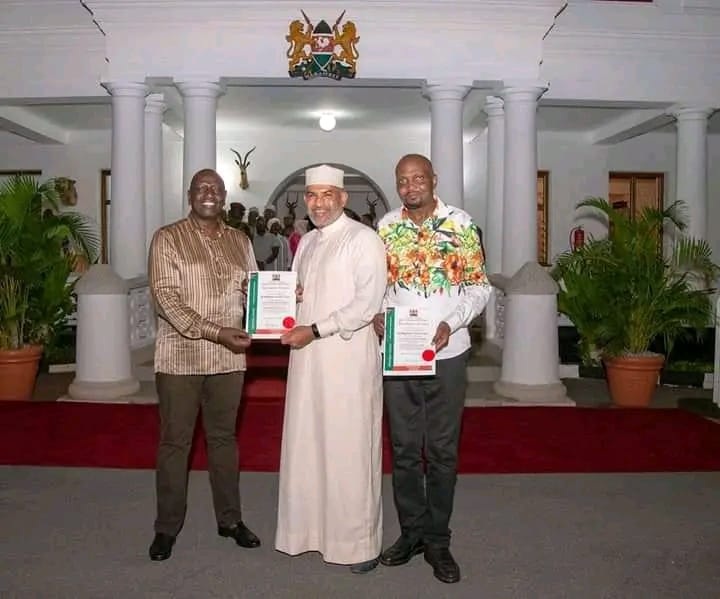
Today at State House Nairobi, President William Samoei Ruto presides over the formalisation of a landmark trilateral cooperation agreement between the County Government of Mombasa, Mombasa Free Zone Limited, and DP World for the Mombasa Industrial Park Special Economic Zone. This is no ceremonial photo opportunity—it is a decisive wager that Mombasa can finally convert its unmatched logistics endowment into a genuine manufacturing and export engine.
The project’s ambitions are substantial: over 20,000 direct and indirect jobs at full development, approximately US$343 million in investment, and nearly US$292 million in annual exports. For a coastal city long constrained by tourism seasonality, persistent youth unemployment, and an economy still tethered to port transit traffic, these figures represent not incremental improvement but structural transformation. The zone will occupy approximately 222 hectares of county-government-leased land in Jomvu Sub-County, less than 20 kilometres from the Port of Mombasa, with an initial development phase of about 40 hectares.
Strategic Logic: Port Gravity Meets Industrial Depth
Mombasa already possesses hard assets that most African industrial parks can only envy: the region’s busiest deep-water port, the Standard Gauge Railway, an expanding road network, and Moi International Airport. What it has conspicuously lacked is the dense, high-value industrial activity that transforms transit cargo into domestic value addition. The Industrial Park is designed to close that gap—creating an integrated ecosystem of manufacturing, warehousing, logistics, and export processing under a single SEZ regime.
DP World’s involvement is particularly instructive. The Dubai-based operator has spent years seeking greater influence over Mombasa’s berths without securing a controlling concession. Rather than wait indefinitely, it has chosen to build the industrial and logistics gravity around the port—a strategic pivot that mirrors its broader African approach: develop special economic zones and hinterland platforms that capture cargo flows, generate logistics revenue, and create sticky regional supply chains, even when terminal operations remain under public or mixed control.
The presence of GulfCap Africa—linked to long-time local advocate Suleiman Shahbal—alongside the county government’s land contribution adds a critical domestic ownership dimension that pure foreign-driven projects often lack.
The timing is fortuitous. Kenya and the UAE signed a Comprehensive Economic Partnership Agreement in 2025. The African Continental Free Trade Area is slowly moving from aspiration to operational reality. Landlocked neighbours—Uganda, Rwanda, South Sudan, and eastern DRC—continue to rely on Mombasa as their primary gateway. An efficient industrial park adjacent to the port reduces landed costs, shortens lead times, and makes Mombasa a more credible alternative to competing regional corridors.
Benefits That Reach Beyond the Fence
For young people in Mombasa and the wider Coast, the promise is concrete: formal jobs and skills transfer in manufacturing, logistics, quality control, cold-chain operations, and related services. For local enterprises, the opportunity lies in graduating from informal or low-value activities to become suppliers, service providers, and eventual participants in global value chains. For investors, the message is unambiguous—Kenya’s coastal gateway is open for business under a predictable SEZ framework offering fiscal incentives, streamlined regulation, and proximity to both domestic and regional markets.
The numbers already circulating—dozens of companies reported to have expressed interest before formal groundbreaking—suggest demand exists. If the projections hold, the zone will contribute meaningfully to Kenya’s industrialisation goals and help diversify Mombasa’s economic base away from its historical reliance on tourism and port transit fees alone.
The Hard Questions That Remain
Ambition alone does not guarantee success. Several execution risks must be deliberately managed.
First, infrastructure and connectivity inside and around the zone must keep pace with tenant demand. Power reliability, water supply, waste management, last-mile road links, and digital systems will determine whether firms can operate at competitive cost. Kenya’s broader SEZ programme has demonstrated that gazettement is considerably easier than consistent delivery of enabling infrastructure.
Second, skills and local content must be intentional rather than assumed. Training pipelines—through TVET institutions, apprenticeships, and partnerships with zone operators—need to commence immediately so that jobs created are filled by Kenyans, particularly from the Coast, rather than imported expertise. Local enterprises will require deliberate supplier-development programmes to capture meaningful value-chain participation.
Third, port efficiency must continue improving. Persistent challenges with empty-container backlogs, dwell times, and inter-agency coordination can undermine the very logistics advantage the Industrial Park seeks to leverage. DP World’s earlier introduction of a Port Community System is a positive step; sustained operational excellence at the port remains non-negotiable.
Fourth, policy consistency and institutional coordination matter profoundly. The national SEZ framework, county government roles, customs procedures, and investment incentives must remain coherent across political cycles. Fragmented decision-making has delayed other industrial projects in the past.
Finally, the zone must avoid becoming an enclave. Strong linkages to the surrounding economy—through procurement, labour, services, and technology spillovers—will determine whether benefits are widely shared or narrowly concentrated.
Mombasa’s Moment, If Seized
Today’s formalisation at State House is a commitment, not a finished product. The real work begins with phased construction, tenant onboarding, skills programmes, and relentless attention to the operating environment. If executed with discipline, the Mombasa Industrial Park can do more than create jobs and generate exports. It can help redefine the city’s economic identity—from transit point and tourist destination into a competitive manufacturing and logistics hub serving East and Central Africa.
Mombasa has the geography, the infrastructure spine, and now a credible international partner willing to invest at scale. The question is no longer whether the opportunity exists. It is whether national and county governments, private partners, and local communities will sustain the focus required to turn today’s signature into tomorrow’s industrial reality. Mombasa’s moment has indeed arrived. The test is whether it will be fully seized.