


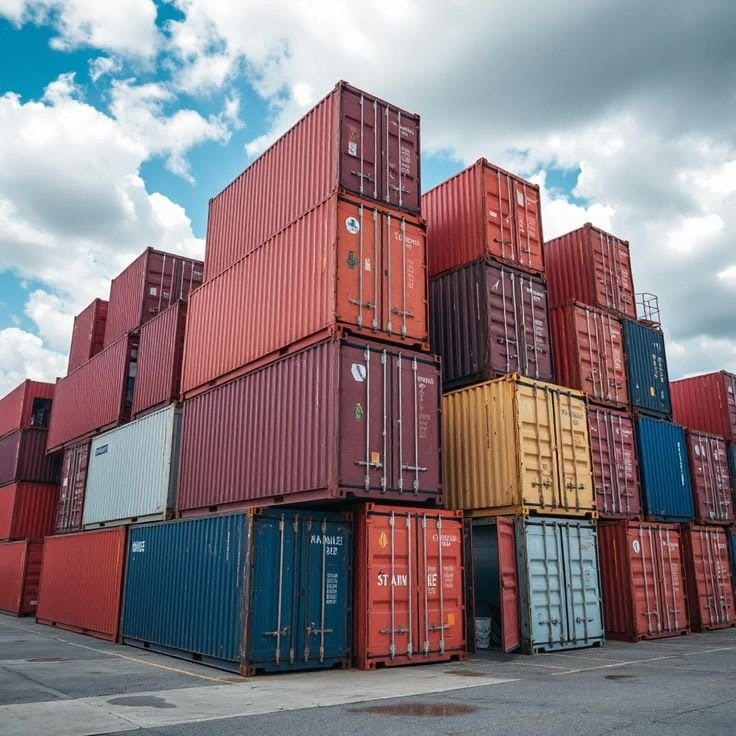
We see them everywhere—stacked in colorful towers at ports, rattling down highways on trucks, or sitting quietly in industrial yards. Shipping containers are the most visible yet least examined pieces of modern infrastructure. A recent post from the Kenya Ships Agents Association (KSAA) posed a simple, powerful question: How many of us actually know what one goes through in its lifetime? The answer reveals far more than steel boxes and logistics. It exposes the hidden mechanics of global trade, the economic pressures facing East African ports, and the quiet resilience that keeps the world’s goods moving.
From Steel Coil to Global Circulator
A container’s life begins in factories—overwhelmingly in China, which produces the vast majority of the world’s supply. Built primarily from Corten (weathering) steel, these boxes are engineered for punishment. The material forms a protective rust patina that slows deeper corrosion, allowing them to endure salt air, stacking pressures of up to six or seven high, crane impacts, and the constant vibration of ships, trains, and trucks. Standard 20-foot and 40-foot units (TEUs and FEUs) are certified under ISO and CSC standards, complete with unique identification numbers that track their every movement.
In active maritime service, a container typically spends 10–15 years circulating the world’s trade routes. During that time it may complete hundreds of voyages, carrying everything from electronics and apparel to coffee, machinery, and refrigerated produce. It is loaded, lashed, stacked, unloaded, inspected, repaired, and repositioned—often empty for part of the journey. Global empty-container movements now account for roughly 41% of capacity, a stubborn imbalance driven by trade asymmetries: goods flow heavily in one direction, boxes must return the other way.
At Mombasa—the gateway for Kenya and much of East Africa—this cycle is especially visible and consequential. Containers arrive full of imports, are stripped, and then must be returned, repositioned, or reloaded for exports. Delays at any point cascade: demurrage charges mount, trucks sit idle, vessel turnaround slows, and the cost of trade rises for everyone from large importers to small traders.
Retirement Is Not the End—It Is a Second Career
Containers rarely fail structurally after a decade at sea. They are retired primarily for economic and operational reasons: cosmetic wear, minor dents, outdated branding, or the simple calculation that a newer unit is more efficient for high-volume liner services. Once out of ocean service, the same box often embarks on a long second life.
On land, with basic maintenance—keeping it off standing water, treating surface rust, protecting seals—a container can easily serve another 15–25 years or more as storage, a worksite office, a modular building, or even housing. One-trip containers (those that have made only a single voyage) can last 30–40 years or longer in static use. Converted units, properly insulated and maintained, have reached 40–50 years. When they finally reach the end, the Corten steel is recyclable, closing a relatively efficient material loop compared with many other industrial products.
This durability is both a strength and a complication. In places like Mombasa, empty containers can accumulate faster than they can be moved. Recent reports of yard congestion, immobilized trucks, and regulatory changes requiring intermediate depot stays illustrate how the physical life of the box collides with operational reality. When depots run near capacity and return processes slow, the entire supply chain feels the friction.
Why This Lifecycle Demands Attention in East Africa
For Kenya and the wider region, understanding the container’s journey is not an academic exercise. The Port of Mombasa is a critical trade hub. Inefficiencies in container turnaround translate directly into higher costs for consumers, reduced competitiveness for exporters, and lost opportunities for the maritime services sector that KSAA represents. Shipping agents, terminal operators, truckers, and shippers all operate within the constraints of these steel boxes’ availability, condition, and movement.
Several structural issues stand out:
Imbalance and repositioning costs. Empty containers must eventually return to surplus regions or be sold into the secondary market. When local demand for empties is low or logistics are constrained, boxes pile up.
Infrastructure and process bottlenecks. Yard capacity, depot rules, documentation requirements, and inter-agency coordination determine how quickly a container can complete its cycle.
Economic value locked in the asset. A container sitting idle is capital immobilized. Faster turnaround improves cash flow for shipping lines, agents, and importers alike.
Sustainability and circularity. Extending useful life through reuse and eventual recycling reduces the need for new steel production. East African markets already have active secondary container trades for storage and conversion—an underappreciated green opportunity.
The KSAA’s focus on these questions is timely. As global shipping navigates post-pandemic adjustments, fluctuating demand, blank sailings, and evolving regulations, local associations that understand the full lifecycle can advocate more effectively for policies that keep boxes moving rather than stacking.
Beyond the Box: Lessons for Trade Policy and Business
The shipping container is a masterclass in standardization. Its success rests on universal dimensions, corner castings, and interlocking systems that allow seamless intermodal transfer. That same logic should guide policy: reduce friction at interfaces—between ship and terminal, terminal and truck, truck and inland depot, and across borders within the East African Community.
Businesses that rely on maritime logistics would benefit from treating containers not as disposable packaging but as circulating capital. Tracking dwell times, understanding demurrage triggers, and planning for empty returns are as important as negotiating freight rates. For the secondary market, clearer grading standards and transparent condition reporting would help buyers and sellers capture more of the residual value.
Finally, the public rarely sees the human and institutional effort behind every box. Ship agents, operations managers, stevedores, truck drivers, and regulators keep the cycle turning. Recognizing that labor and coordination is part of valuing the system.
A Call for Greater Visibility
The next time you pass a stack of containers at the port or see one on a truck, remember that it is not static scenery. It is a durable, standardized, globally mobile asset whose 10–15 years at sea and subsequent decades on land underpin the prices on supermarket shelves, the availability of industrial inputs, and the competitiveness of regional trade.
Kenya and East Africa stand to gain by treating the full lifecycle of the shipping container as a strategic issue rather than a background detail. Faster turns, better data, smarter regulation, and deliberate reuse can lower costs, reduce congestion, and extract more value from every steel box that arrives and departs Mombasa.
The containers are already doing the hard work. The question is whether our systems, policies, and business practices will keep pace with them.
Andrew Mwangura is a maritime analyst based in Mombasa.