


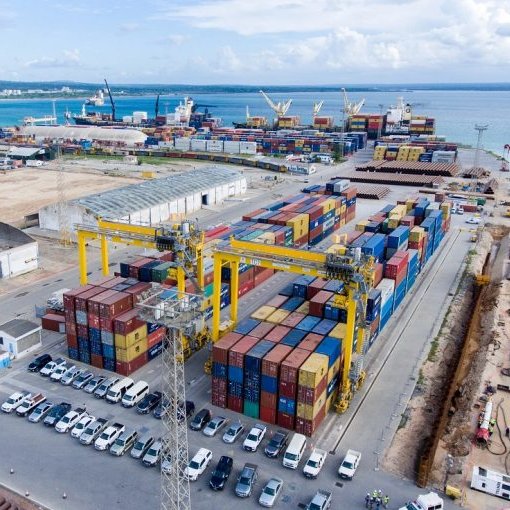
Ocean Network Express (ONE) has launched the Mozambique Coastal Link (MCL), a bi-weekly container service connecting Port Louis, Mauritius, with Maputo, Beira, and Nacala. The maiden sailing is set to depart Port Louis on 18 September 2026, following the rotation Port Louis–Maputo–Beira–Nacala–Port Louis.
On the surface, this is a routine network addition by a major carrier. In the context of Mozambique’s geography, infrastructure deficits, and regional ambitions, it is far more consequential. It is a private-sector signal that coastal shipping can finally begin to function as the country’s missing logistical backbone.
Mozambique stretches over 2,500 kilometres along the Indian Ocean. Its three principal container ports—Maputo in the south, Beira in the centre, and Nacala in the north—serve distinct hinterlands and landlocked neighbours. Maputo handles cargo for southern Mozambique, Eswatini, and parts of South Africa and Zimbabwe. Beira is the natural gateway for central Mozambique, Zimbabwe, Zambia, and the Democratic Republic of Congo via the Beira Corridor. Nacala, with its deep natural draft, anchors the Nacala Corridor reaching Malawi and Zambia, while also serving the emerging gas economy in Cabo Delgado.
For decades, these ports have operated more as isolated terminals than as nodes on an integrated coastal network. Domestic cargo has moved overwhelmingly by road along the N1, a single north–south artery vulnerable to flooding, congestion, and high operating costs. The result: elevated logistics costs, fragmented markets, and a limited ability to move agricultural produce, construction materials, or consumer goods efficiently across the country.
The MCL does not invent coastal shipping; it formalises and internationalises it. By tying the three ports into a regular, scheduled loop that also connects to Mauritius—a regional hub with strong Far East Asian links—ONE creates both domestic cabotage capacity and an additional gateway for Asian trade. Importers and exporters in Beira and Nacala gain more frequent, predictable access to Asia without relying solely on transshipment through Durban or other distant hubs. Maputo gains another feeder option to consolidate cargo for larger vessels calling at Port Louis. For hinterland customers, the service offers an alternative to congested corridors, potentially lowering landed costs and improving reliability.
This development arrives as several structural forces align. First, the Mozambican government has publicly recommitted to cabotage. In 2025, President Daniel Chapo relaunched coastal shipping with privately financed vessels, framing it as a deliberate policy to shift freight from road to sea, ease pressure on the N1, cut transport costs for basic goods, and support agricultural marketing. Earlier initiatives—including the 2020 resumption of a Maputo-to-Palma service and more recent Nacala–Beira fertilizer and mixed-cargo runs by operators such as CIVITAS—demonstrated both the demand and the operational challenges. A major global carrier placing a scheduled bi-weekly string on the coast raises the commercial credibility of the entire segment.
Second, the ports themselves are no longer static. Beira has attracted successive new lines (including ONE’s earlier entry in 2023) and continues to invest under Cornelder de Moçambique. Nacala’s deep-water advantage and rail links position it for larger vessels and corridor traffic. Maputo remains the most developed southern gateway. When these three nodes are regularly connected by sea, efficiency gains compound: empty containers can be repositioned more easily, domestic cargo can fill residual capacity, and the ports can specialise rather than each trying to be all things to all trades.
Third, the broader economic context is shifting. Mozambique’s LNG projects in Cabo Delgado are restarting after years of force majeure. Construction materials, equipment, and eventually export logistics will generate substantial coastal demand. Agricultural value chains in the centre and north remain constrained by high transport costs. Regional integration under the African Continental Free Trade Area and the need to serve landlocked neighbours efficiently both favour reliable multi-port coastal networks. A service linking Mozambique’s ports to Mauritius also strengthens the Indian Ocean rim economic space, long under-utilised relative to its geographic potential.
Yet realism is required. A bi-weekly service is not a daily shuttle. Frequency, vessel size, reliability in the face of weather and port congestion, and competitive pricing will determine whether cargo actually shifts from road. Cabotage regulations, customs procedures for domestic movements, and the availability of efficient last-mile connections inland remain potential friction points. Security concerns in the north, while improved, have not disappeared. Infrastructure investments—dredging, quay capacity, intermodal yards, and the long-term rehabilitation of the N1 and key rail corridors—must continue in parallel. Without them, the MCL risks becoming another under-utilised string rather than a transformative link.
The deeper significance lies in the demonstration effect. For years, the conversation about Mozambican logistics has been dominated by corridor competition (Beira versus Nacala), mega-projects, and donor-funded road and rail upgrades. Those remain essential. What has been missing is a commercially viable, regularly scheduled coastal service that treats the coastline as an asset rather than a barrier. ONE’s decision to commit vessels and marketing capacity to the MCL suggests the economics are beginning to work. If the service proves reliable and attracts both domestic and international cargo, it will lower the risk for other carriers and local operators to expand frequency, add calls, or introduce specialised vessels.
Mozambique does not need to invent a new logistics model. It needs to complete the one geography already suggests: three complementary ports linked by efficient coastal shipping, each serving its natural hinterland while collectively offering a coherent national and regional gateway. The Mozambique Coastal Link is a concrete step in that direction. Whether it becomes a durable piece of infrastructure or a short-lived experiment will depend on execution by the carrier, cooperation from port and customs authorities, and continued policy support for cabotage. For a country whose economic geography has long been defined by distance and disconnection, even a bi-weekly loop between Maputo, Beira, Nacala, and Port Louis is progress worth watching closely.