


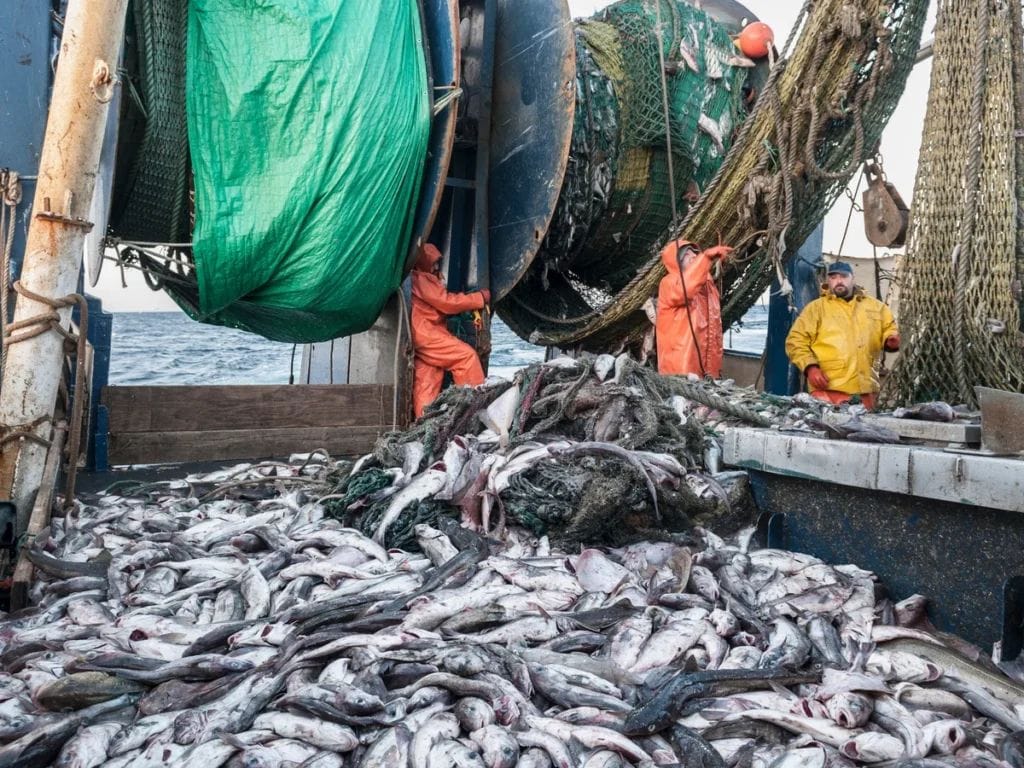
As Kenya prepares to host the Agriculture and Food Systems Transformation Summit (AFSS 2026) from 7–9 October, the Ministry of Agriculture and Livestock Development’s promotional materials project confidence and ambition. The imagery is deliberate and striking: a fisherman hauling a net heavy with catch against a backdrop of working harbours, boats, and seabirds. This is no accident. It signals that the summit is not merely a crop-and-livestock gathering. Fisheries and the blue economy sit at the visual and conceptual centre of the conversation. The stated pillars—Policy, Production, Water, Markets, and Innovation—are the right ones. Four years into the Bottom-Up Economic Transformation Agenda (BETA), the timing is significant. Yet the real test is whether this gathering produces measurable results for the farmers and fishers who still face climate shocks, thin margins, illegal competition, and uneven access to the tools the summit will celebrate.
Kenya’s agricultural sector remains the backbone of the economy and the primary source of livelihoods for most households. Government messaging around the summit correctly emphasises higher farmer incomes, food security, food sovereignty, and better jobs. Preparations have involved a whole-of-government approach, with principal secretaries from agriculture, irrigation, cooperatives, environment, blue economy and fisheries, and even broadcasting and telecommunications participating in technical briefings. That breadth is encouraging. Food systems transformation cannot succeed if irrigation, markets, digital infrastructure, environmental management, and aquatic resources operate in silos.
The production pillar arrives under strain. Recent assessments point to significant yield shortfalls in key maize-growing regions following prolonged dry spells and high temperatures during critical growth stages. Some western counties face losses of up to 36 percent below average. National long-rains maize production has been estimated substantially below the five-year average in multiple analyses. At the same time, forecasts for the October–December short rains point to above-normal precipitation driven by a strong El Niño and a positive Indian Ocean Dipole. The combination creates a familiar and dangerous pattern: drought damage followed by flood risk, post-harvest losses, and pressure on prices. Any credible production discussion at the summit must confront these realities rather than paper over them with selective growth statistics from previous years.
Water is the most urgent and least forgiving of the five pillars. Expanded irrigation—Galana Kulalu and other schemes—has been repeatedly cited as a priority under BETA. Reliable water for production is not optional in a climate that is delivering both record dryness and intense rainfall events within the same agricultural year. The summit’s inclusion of water as a core theme is therefore essential. Progress should be measured by hectares under sustainable irrigation, reduction in rain-fed vulnerability, and evidence that smallholders—not only large schemes—are benefiting.
Markets and value addition remain the persistent weak links. Livestock marketed production has shown growth in recent figures, and export earners such as tea, cut flowers, fruits, vegetables, and coffee continue to generate significant foreign exchange. Yet many primary producers still capture only a fraction of the final value. Cooperatives, digital market platforms, and improved post-harvest infrastructure must move from pilot status to scale. The poster’s emphasis on markets is correct; the test is whether the conversations translate into lower transaction costs, better price discovery, and reduced post-harvest losses for ordinary farmers.
Innovation offers the brightest near-term prospects. The registration of millions of farmers under digital systems, the launch of soil-testing laboratories, and the growing visibility of drones, climate-smart technologies, and data platforms at events such as the Nairobi International Trade Fair show real movement. Digital tools can improve extension services, input targeting, and access to finance. But technology without connectivity, affordable data, and farmer-centred design risks becoming another layer of exclusion. Innovation must be judged by adoption rates among smallholders and measurable gains in productivity and income—not by the number of apps launched or drones demonstrated.
Fisheries and the blue economy demand equal billing. The poster’s dominant visual is not window dressing. Kenya’s blue economy holds substantial under-realised potential for protein production, employment, export diversification, and climate-resilient livelihoods. Current fish production has risen to approximately 189,151 tonnes as of August 2026—an 8.1 percent increase from 173,741 tonnes in 2022—with the value of landings climbing more sharply in recent years. Aquaculture, particularly cage culture, has driven much of the growth. Government interventions through the Kenya Marine Fisheries and Socio-Economic Development Project have channelled KSh 3.3 billion in grants to more than 1,260 community groups involving over 212,000 people, with a strong focus on women, youth, and vulnerable households. Hundreds of boats and fish cages have been distributed, deep-sea fishing training provided, modern landing sites developed, and the Shimoni Fish Port completed with an accompanying mariculture centre of excellence.
Yet the gap between potential and reality remains wide. Kenya is still exploiting less than 13 percent of its estimated marine fish biomass. Illegal, unreported, and unregulated fishing continues to drain tens of billions of shillings annually. Some inland lakes have seen sharp declines in landings. National demand for fish far exceeds domestic supply, leaving a structural deficit measured in hundreds of thousands of tonnes. The National Blue Economy Strategy 2025–2030 and related policies set ambitious targets—raising sector revenue toward KSh 300 billion annually and expanding aquaculture significantly—but delivery depends on stronger monitoring, control and surveillance systems, cold-chain infrastructure, value addition, and genuine inclusion of coastal and lakeside communities.
Conflicts are already emerging. Rapid expansion of commercial fish cages on Lake Victoria has prompted petitions over environmental impacts, navigational hazards, and competition with tourism and traditional fishing. Sustainable management must therefore sit at the heart of any fisheries discussion at the summit. Integrating marine and inland fisheries fully into the broader food-systems agenda is overdue. The presence of the Principal Secretary for Blue Economy and Fisheries in the summit’s technical preparations is a positive signal; the outcome must be concrete commitments on sustainable capture fisheries, responsible aquaculture scaling, reduced post-harvest losses, and higher incomes for the millions who depend on aquatic resources.
An Op-Ed cannot ignore the risk that the summit becomes a high-profile review of progress without hard accountability. Four years into BETA, the public is entitled to clear metrics: how many additional farmers and fishers have moved above the poverty line through these interventions; what share of the national food basket is now produced under climate-resilient systems; how irrigation and aquaculture expansion have reduced the need for emergency imports; and whether youth and women are gaining meaningful ownership and employment across both terrestrial and aquatic value chains. The presence of farmers, fishers, county governments, and young innovators is promised. Their voices must shape the outcomes, not merely decorate the programme.
Kenya does not lack strategies, summits, or declarations. What it needs is execution that survives the next drought, the next flood, the next illegal trawler, and the next election cycle. The Agriculture Summit 2026 arrives at a moment of genuine pressure on food systems. If the five pillars—Policy, Production, Water, Markets, and Innovation—are treated as interconnected and urgent, and if fisheries and the blue economy are elevated from supporting imagery to core policy priority, then the gathering can mark a genuine turning point. If it remains largely ceremonial, the fishermen hauling their nets and the farmers watching the sky will continue to carry the real cost of incomplete transformation. The choice is still open.