


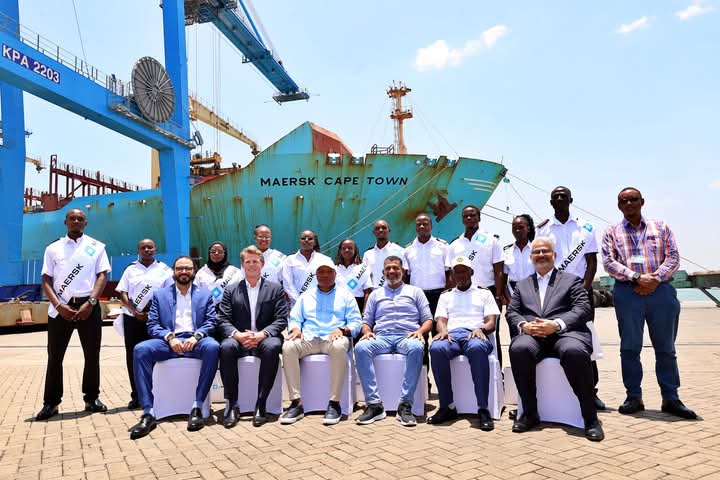
In the maritime industry, few bottlenecks frustrate aspiring officers more than the gap between academic training and the sea time required for a Certificate of Competency (CoC). Partnerships such as those between CMA CGM and institutions like Kenya’s Bandari Maritime Academy have been rightly celebrated for opening berths on modern container vessels. Cadets gain structured onboard experience, complete Training Record Books (TRBs), and accumulate the supervised sea service demanded by the STCW Convention.
Yet a recurring complaint surfaces once those cadets complete their time aboard CMA CGM ships: when they approach other shipping companies or manning agents, they are often told they must “start cadetship afresh.” Each company, it is said, operates under its own cadetship policy. The honest question follows: after the cadet phase ends, do meaningful policies actually exist that recognise prior sea time and training across employers?
The Structural Reality of Cadetships
A cadetship is not merely “time at sea.” Under STCW, it is a supervised programme designed to deliver both the minimum seagoing service — typically 12 months for deck cadets toward an Officer of the Watch unlimited CoC, sometimes less for engineers when workshop time is credited — and the documented competencies listed in the STCW Code tables. The TRB, signed by the Master or qualified officers, is the primary evidence. Flag-state administrations — whether the Kenya Maritime Authority, the UK’s MCA, Australia’s AMSA or others — ultimately decide whether that sea time and those competencies count toward certification. In principle, properly documented service on any STCW-compliant vessel of appropriate size and trade should be recognised by administrations that accept the flag or the training scheme.
Company policy, however, sits on top of this international framework. Major operators and ship managers run their own sponsored cadet programmes. These typically include:
· Pre-selection and sponsorship agreements, sometimes with bonds or service commitments after qualification.
· Company-specific training matrices, safety cultures, vessel types and internal assessment standards.
· Preference for “homegrown” officers who have absorbed the company’s procedures, software and operational philosophy from the start.
CMA CGM’s arrangements with maritime academies focus primarily on providing sea-time berths and practical exposure. They are valuable, especially in regions where training slots are scarce. But they do not automatically convert into guaranteed junior-officer contracts with CMA CGM itself, nor do they create a transferable “CMA CGM cadet credential” that other companies are obliged to honour as equivalent to their own full cadetship. Other companies therefore retain the commercial freedom to decide that a candidate who has sailed only on CMA CGM vessels has not completed their structured programme and should enter as a fresh cadet — or at best as an experienced rating while completing remaining company-specific requirements.
This is not unique to CMA CGM. Similar friction appears across the industry: a cadet who has completed phases with one sponsor may find limited credit when applying to another. Sponsorship bonds, training-cost recovery clauses and internal promotion matrices reinforce the preference for continuity within a single company’s ecosystem.
What Happens After the CoC Is Issued?
Once a candidate obtains a first CoC (OOW or equivalent), the formal “cadetship” phase ends. From that point, the governing instruments change. STCW and national regulations require further sea service and examinations for higher certificates — Second Mate, Chief Mate, Master; or the engineering equivalents. Companies apply their own experience matrices for promotion and employment, typically demanding documented time in rank, vessel type and sometimes specific trades or equipment. Sea-service testimonials and discharge books become the transferable currency, not the original company cadet programme.
In practice, this means:
· A properly certificated junior officer with verifiable sea time from CMA CGM vessels can be employed by other operators. Many companies hire “outside” officers, especially when berths are short or specific experience — container ships, for example — is needed.
· Preference and risk aversion still favour candidates who completed the company’s own pathway. A new officer may face longer familiarisation periods, lower initial trust or slower progression.
· There is no industry-wide, binding “post-cadetship recognition policy” that forces Company B to treat Company A’s completed cadetship as fully equivalent for recruitment or accelerated promotion. Flag-state recognition of the CoC itself is the floor; company policy is the ceiling.
· Mutual recognition of certificates under STCW — and mechanisms such as EU mutual recognition or bilateral endorsements — addresses the legal right to serve, not the commercial decision of which junior officers a particular owner or manager prefers to hire and promote.
Why the Friction Persists
Several structural factors sustain the problem:
Investment recovery. Companies that fund or heavily support cadet training seek a return through retention. Accepting “finished” cadets from rivals dilutes that return.
Risk and standardisation. Different companies operate different vessel types, software systems, safety management systems and trade patterns. A cadet trained exclusively on one fleet may require significant additional familiarisation.
Supply-side pressure. In many developing maritime nations, the number of academy graduates far exceeds available structured sea-time berths. Companies that offer berths can set their own terms for subsequent employment.
Absence of a neutral clearing mechanism. Unlike some land-based professions with portable apprenticeships or recognised prior learning frameworks, the maritime industry has not developed a widely accepted intermediate credential that sits between “cadet under Company X” and “fully independent junior officer.”
Are There Any Policies Past Cadetship?
Yes — but they are limited and uneven.
Regulatory policies exist: STCW sea-service requirements, TRB standards and flag-state assessment rules. These protect the integrity of the CoC itself.
Company policies exist: retention incentives, promotion matrices, familiarisation requirements and sometimes graduate or junior-officer development programmes. These are internal and non-transferable by design.
Industry-level or multi-company policies that systematically recognise partial or completed cadetships across operators remain weak or non-existent. Some training management companies and larger ship managers accept sea time from multiple owners when the documentation is robust, but this is discretionary rather than obligatory.
Progressive steps would include clearer guidance from national maritime administrations on the portability of documented cadet sea time, stronger emphasis on competency-based — rather than company-branded — assessment, and greater transparency from operators about how they evaluate external cadets. Partnerships such as CMA CGM’s with Bandari are positive for access; they become more powerful when they are explicitly designed with exit pathways and documentation standards that other reputable employers will readily accept.
What CMA CGM, the Government of Kenya, and Kenya’s MET Institutions Should Do
The gap between completed sea time and meaningful employment is not inevitable. Coordinated action by the three key actors can turn training success into real careers.
CMA CGM should formalise exit pathways and documentation standards by issuing detailed, STCW-mapped sea-service testimonials and completed Training Record Books that other companies can readily verify. It should create limited junior-officer conversion opportunities for high-performing Kenyan cadets and lead industry discussions on voluntary recognition of structured cadet sea time across operators. Expanding the partnership beyond berth provision to include mentoring, familiarisation modules and clear performance feedback would further reduce the “start afresh” barrier.
The Government of Kenya — through the Ministry of Mining, Blue Economy and Maritime Affairs and the Kenya Maritime Authority — should issue explicit guidance confirming that properly documented sea time on STCW-compliant vessels counts fully toward certification, regardless of the company that provided the berth. It should expand mutual recognition agreements to include cadet sea-time provisions, establish a transparent national cadet placement and tracking system, accelerate Seafarer Identity Document issuance, and develop a national post-cadetship employment policy that discourages unnecessary restarts of structured training. Targeted incentives for companies that hire Kenyan junior officers would also help close the employment gap.
Kenya’s Maritime Education and Training institutions, led by Bandari Maritime Academy, should ensure every cadet leaves with a complete, professionally presented competency portfolio — and train them to present that evidence effectively. They must diversify sea-time and employment partnerships beyond any single operator, introduce short post-sea-time bridging programmes focused on conversion to junior officer roles, strengthen dedicated industry liaison and placement functions, and align curricula more closely with the operational expectations of multiple employers. Collective advocacy with KMA for clearer recognition rules will amplify their impact.
A tripartite working group bringing together CMA CGM, government agencies and MET institutions should be established to track outcomes, share data on conversion rates and design practical recognition mechanisms. Sea time must be treated not as an end in itself but as the first stage of a professional pipeline that leads to employment.
Conclusion
Completing sea time on CMA CGM vessels is a genuine and often hard-won achievement. It satisfies a critical regulatory requirement and provides real operational experience. It does not, however, create an automatic passport into the cadet or junior-officer ranks of every other shipping company. Each operator’s cadetship policy remains a commercial instrument, not a regulated public good. After the first CoC is issued, the formal cadetship ends and the market for certificated officers begins — a market still heavily influenced by company-specific preference and risk management.
Until clearer, competency-focused recognition mechanisms are developed that sit above individual company programmes, cadets will continue to face the frustrating advice to “start afresh.” That advice is not always a rejection of their ability; it is frequently a reflection of how the current system of sponsorship, investment recovery and internal standardisation is structured. With deliberate action by CMA CGM, the Government of Kenya and the country’s maritime training institutions, documented high-quality sea time can become the valuable, portable asset it should be — rather than a dead end.
Andrew Mwangura is a maritime safety and labour analyst.