


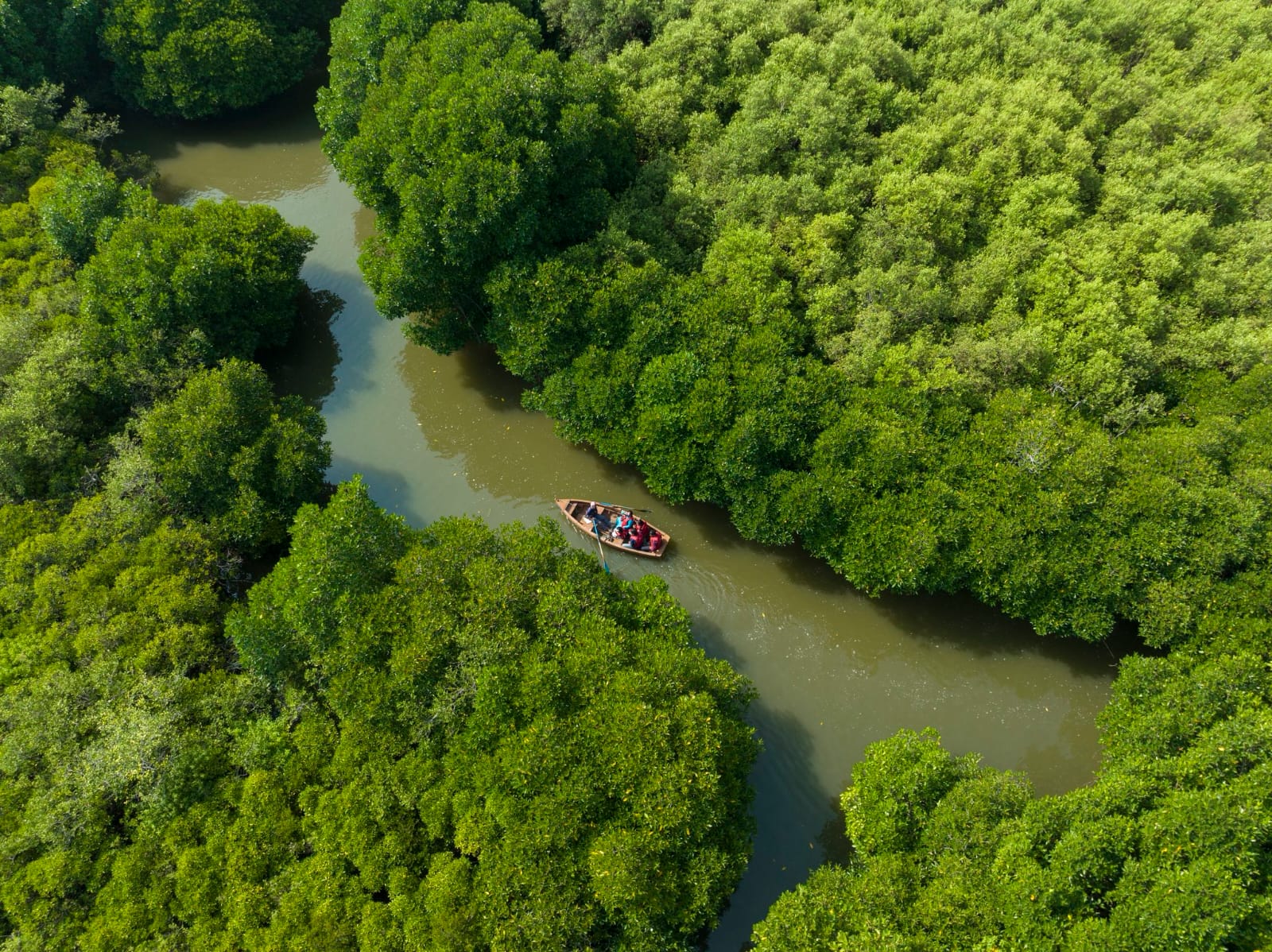
On 31 October, the official opening of what its organisers describe as Kenya’s first mangrove resource centre marked a quiet but significant shift in how coastal conservation is being practised in one of East Africa’s most pressured urban ecosystems. Led by Bosco Juma and the teams behind Mikoko Nature Trail/MikokoSafaris and Big Ship Environmental Conservation, the centre packages restoration, livelihood innovation, education and tourism into a single hub on the shores of Tudor Creek. It offers nature trails and mangrove safaris, Bandarini Restaurant, Asali Mikoko (mangrove honey), Mikoko Endelevu products, an “Adopt a Site” programme under the #BringBackTudorCreek banner, and the Volunteership and Internship Mentorship Program (VIMP). Partners include the Aga Khan Foundation, Conservation International, Wetlands International, COMRED and CORDIO East Africa.
This is not another ceremonial tree-planting event. It is an attempt to institutionalise a working model of community-based ecological mangrove restoration in a peri-urban setting where the usual remote, rural blue-carbon playbook does not fully apply.
Why Tudor Creek Matters
Tudor Creek is Mombasa’s largest and only gazetted forest. It stretches from near Fort Jesus toward Rabai in Kilifi County and once supported extensive mangrove cover. Today roughly 40 percent of Mombasa’s mangrove area—estimates place the county’s mangrove extent around 3,700–3,800 hectares—is degraded. The drivers are classic urban pressures: encroachment on riparian land, illegal harvesting for firewood and charcoal (including for illicit brewing), sedimentation, waste dumping, and the cumulative impact of port and city expansion.
Mangroves here are not a distant wilderness amenity. They function as fish nurseries supporting local fisheries, natural buffers against erosion and storm surge, water filters, and high-value blue carbon stores. Globally, mangrove soils can sequester carbon at rates several times higher than many terrestrial forests. In a county whose overall forest cover remains well below national targets, restoring Tudor Creek is both a local livelihood imperative and a contribution to Kenya’s 15-billion-tree ambition and climate commitments.
Recent government and partner planting drives—thousands to tens of thousands of seedlings at a time by the Kenya Forest Service, county teams, Beach Management Units, Equity Bank, Kenya Pipeline Company, youth groups and others—show momentum. Yet survival and long-term stewardship remain the harder tests. A resource centre that treats the mangrove as a living classroom and economic asset is a logical next step.
The Model on Offer
Bosco Juma’s track record provides context. A YALI alumnus with training in community-based ecological mangrove restoration, he co-founded Mikoko Nature Trail and Big Ship. Under these initiatives, hundreds of thousands of mangroves have been planted, tourism has been integrated into conservation, and alternative livelihoods—including beekeeping—have been promoted. VIMP extends the approach into structured youth mentorship.
The new centre consolidates these strands:
· Experience and education: Guided trails, birdwatching, cultural elements and a “mangrove museum” function turn visitors into informed stakeholders rather than passive spectators.
· Enterprise: The restaurant, honey and value-added products create immediate income streams that can underwrite ongoing protection.
· Adoption and accountability: The Adopt-a-Site programme invites institutions, companies and individuals to take ownership of specific restoration patches—mirroring successful corporate and community adoptions already occurring along the creek.
· Talent pipeline: VIMP addresses the chronic gap between short-term planting campaigns and the skilled local capacity needed for monitoring, nursery management and enforcement.
This blend of conservation, tourism and enterprise echoes successful elements of Mikoko Pamoja in Gazi Bay—the pioneering community blue-carbon project further south—but adapts them to a denser, more contested urban edge. The inter-religious and urban-rural framing noted at the launch is not decorative; Mombasa’s social fabric is complex, and durable conservation must navigate it.
Strengths, Risks and What Success Requires
The strengths are clear. Community ownership reduces the classic “project ends, trees die” problem. Diversified income lowers pressure on the forest itself. Visible tourism products can generate political and public support that pure protection rarely achieves. Positioning the site as a learning centre creates a platform for exchanging best practices with other Kenyan and regional initiatives.
The risks are equally real. Urban encroachment and weak enforcement can undo gains quickly—reports of buildings appearing well inside the legal setback from the high-water mark illustrate the point. Tourism itself can become extractive if not carefully managed. Honey and restaurant enterprises need consistent quality, market access and hygiene standards. Carbon or biodiversity credit opportunities, while promising, require rigorous measurement, reporting and verification that small community organisations often struggle to sustain alone. Funding for the centre’s second and third phases will need to move beyond launch enthusiasm into reliable multi-year support.
Success will therefore depend on several practical factors: clear co-management arrangements with the Kenya Forest Service and county government; transparent benefit-sharing that reaches the households closest to the resource; continuous ecological monitoring of survival rates, biodiversity indicators and carbon estimates; and deliberate integration with larger programmes such as FAO’s youth forest champions work and national restoration campaigns. Scaling the Adopt-a-Site idea into a formal pipeline for corporate ESG and institutional commitments could prove particularly powerful.
Broader Implications
Kenya’s coast is dotted with mangrove restoration efforts—some highly successful, others episodic. The Mombasa resource centre is distinctive because it confronts the hardest setting: the urban fringe where people, ports, poverty and ecosystems collide daily. If it can demonstrate that a living mangrove system can simultaneously protect shorelines, support fisheries, sequester carbon, educate citizens and generate decent local jobs, it becomes a replicable template for other rapidly growing coastal cities in the Western Indian Ocean.
The launch on 31 October was the easy part. The real test is whether the centre becomes a permanent institution that keeps planting, educating, employing and defending Tudor Creek long after the ribbon-cutting photographs fade. Kenya’s blue carbon future—and the resilience of communities who live beside these forests—will be shaped by exactly these kinds of grounded, multi-purpose experiments. The trees, and the people who depend on them, cannot afford for this one to remain only a promising beginning.
Andrew Mwangura is a maritime and environmental writer based in Mombasa.