


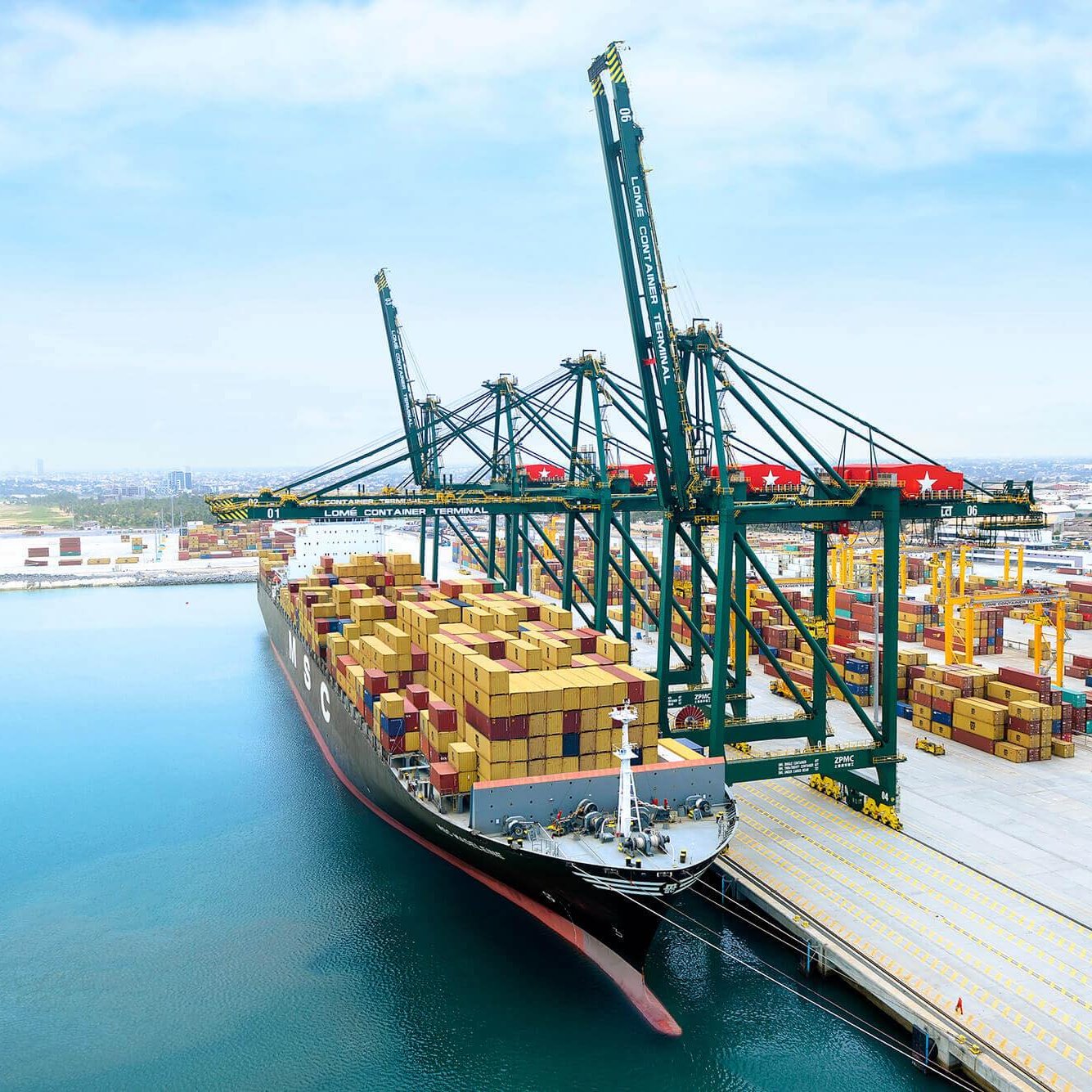
In early November 2026, the Port Autonome de Lomé quietly welcomed a new tugboat. Built in Turkey by SANMAR, operated by Spain’s Boluda, measuring 23 meters long and 12 meters wide, powered by twin Caterpillar 3516 engines delivering more than 6,000 horsepower, and equipped with Rolls-Royce azimuth thrusters, the vessel offers 80 tonnes of bollard pull—10 tonnes more than the rest of Lomé’s existing fleet. A Togolese crew sailed it from Las Palmas. An official naming ceremony is planned for January 2027.
On the surface, this is routine fleet modernization. Look closer, and it is a calculated move in a high-stakes regional contest for container traffic, transshipment dominance, and economic leverage along the Gulf of Guinea.
Capacity, Safety, and the Reality of Growing Ships
Modern container vessels keep getting larger. Assisting them safely during berthing and unberthing demands more towing power, better maneuverability, and higher operational reliability. The jump from 70-tonne to 80-tonne bollard pull is not cosmetic; it expands the range of ships Lomé can handle efficiently and reduces risk during complex maneuvers. Azimuth thrusters give precise 360-degree control, further improving safety and speed of operations.
Lomé has already demonstrated momentum. It ranked 91st in Lloyd’s List’s 2026 ranking of the world’s busiest container ports (up one place) and handled roughly 2.4 million TEUs in 2025, a 16% year-on-year increase. New equipment that supports larger vessels helps protect and extend that growth. Without it, the port risks becoming a bottleneck precisely when traffic is rising.
Regional Rivalry, Especially with Tema
West African ports are in open competition. Ghana’s Tema Port, expanded and modernized with major private investment, remains the clearest regional rival. Cotonou, Abidjan, and others are also upgrading. In this environment, incremental advantages in vessel assistance, turnaround times, and safety records matter. Shipping lines reward reliability and capacity. A stronger tug fleet is one of the practical levers that can tip decisions on calls and hub status.
Togo’s leadership, under the guidance of President Faure Gnassingbé and Maritime Economy Minister Edem Kokou Tengue (also director general of the port authority), is treating the port as a strategic national asset rather than passive infrastructure. The public framing of the tugboat arrival—explicitly linked to presidential orientations and national seafarer capability—underscores that political intent.
Local Skills as Soft Power
The decision to have a fully Togolese crew deliver the vessel from the Canary Islands is more than a feel-good story. It demonstrates growing national competence in complex maritime operations. In an industry still heavily dependent on foreign expertise for specialized equipment, this builds institutional capacity, reduces long-term reliance on external operators, and strengthens Togo’s credibility as a serious maritime player. It also creates a narrative of ownership that resonates domestically and regionally.
Partnerships Without Illusions
The tug is Turkish-built and Spanish-operated. This is typical of modern African port development: technology and operational expertise often come from established global players while African states provide the policy direction, regulatory environment, and strategic ambition. The key question is whether these partnerships transfer genuine skills and decision-making power over time, or whether they remain extractive. The Togolese crewing of the delivery voyage is a positive signal on the skills side.
Limits and Larger Context
One tugboat does not transform a port. Lomé still faces the classic challenges of West African maritime logistics: hinterland connectivity, customs efficiency, regional political stability, and competition from better-capitalized neighbors. Success will depend on continued investment in terminals, digital systems, and corridor infrastructure linking the port to landlocked markets in the Sahel and beyond.
Yet symbols matter in competitive industries. Visible modernization signals seriousness to shipping lines, investors, and regional peers. It also reinforces the broader African push—visible in forums from the African Maritime Council to national strategies—for greater control over blue-economy assets rather than remaining pure price-takers in global shipping networks.
The Bigger Picture
Africa’s ports are no longer just passive gateways. They are arenas of economic statecraft. Togo’s addition of a high-capacity tug is a modest but concrete example of a country treating its port as a competitive instrument rather than a static public utility. In a region where container volumes are growing and larger ships are becoming the norm, the ports that can assist those ships safely and efficiently will capture disproportionate value.
The real test will come not at the naming ceremony in January, but in whether Lomé sustains a pattern of incremental, capability-focused upgrades while deepening local expertise. If it does, this tugboat will look less like an isolated purchase and more like an early marker of a deliberate strategy to punch above its weight in West African maritime trade.