


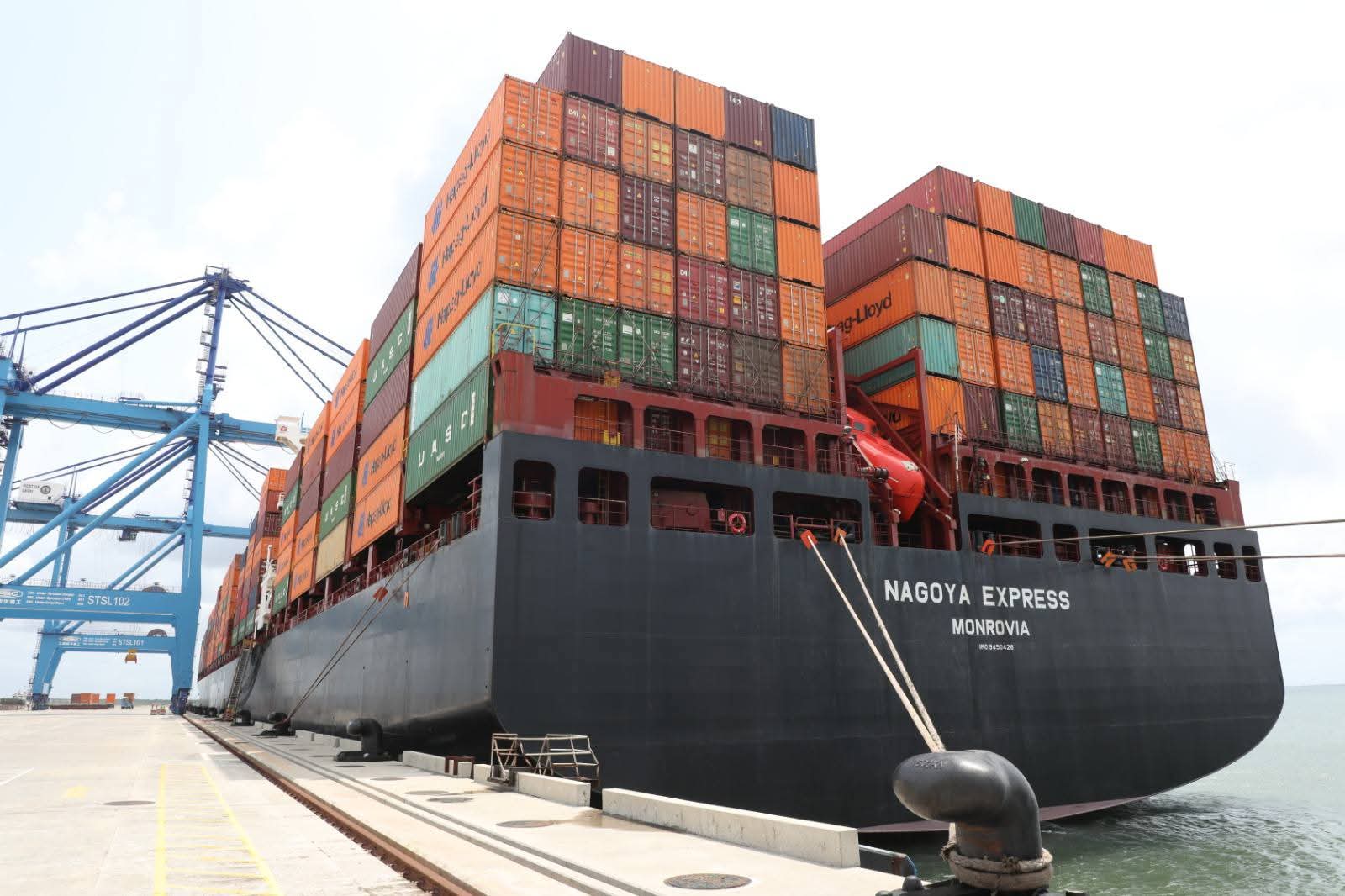
Each morning, as giant container vessels edge cautiously alongside the quays of the Port of Mombasa, they bring more than steel boxes filled with goods. They carry evidence of Kenya’s economic vitality, the confidence of international shipping lines, and the fortunes of millions of East Africans whose livelihoods depend on uninterrupted global trade.
The latest operational figures from the Port of Mombasa are therefore far more significant than routine shipping statistics. The simultaneous handling of 5,413 containers by MV Jolly Oro and MV Kota Sempena, together with a projected 48 vessel calls over the next fourteen days, points to a port steadily consolidating its position as the commercial heartbeat of East and Central Africa.
Yet Kenya must resist the temptation to celebrate cargo growth in isolation. Rising throughput is not an end in itself—it is merely a means to a far more important objective: transforming the Port of Mombasa into a catalyst for industrialisation, export competitiveness, employment creation, and regional economic integration.
Beyond Throughput: Rethinking Port Success
For decades, Kenya has measured the success of its ports by the number of ships handled and the volume of cargo processed. While these indicators remain important, the more fundamental question is whether increased cargo translates into broader national prosperity. A busy port that merely facilitates imports without stimulating domestic production and exports cannot sustain long-term economic growth.
The encouraging aspect of current operations is the movement of 727 export containers. These represent Kenyan tea, coffee, horticultural produce, manufactured goods, textiles, and other value-added products reaching global markets. Every export container strengthens Kenya’s foreign exchange earnings, supports domestic industries, and creates jobs across the agricultural, manufacturing, and logistics sectors.
However, Kenya’s persistent trade deficit reminds us that far more must be done. The country’s export base remains relatively narrow, while imports continue to dominate containerised traffic. The Port of Mombasa should therefore be viewed not simply as a logistics facility but as a strategic instrument for implementing Kenya’s industrial policy. Export Processing Zones, Special Economic Zones such as Dongo Kundu, and manufacturing clusters must be fully integrated with port operations to create seamless value chains that increase exports rather than merely facilitate imports.
Diversity and Competitive Pressures
The projected arrival of 26 container vessels, 11 conventional cargo ships, five car carriers, four oil tankers, and two bulk carriers demonstrates the remarkable diversity of cargo handled by the port. This diversity provides resilience against fluctuations in global trade and positions Mombasa as one of Africa’s most versatile maritime gateways.
Nevertheless, regional competition is intensifying. Ports such as Dar es Salaam, Djibouti, Durban, Walvis Bay, and Berbera are investing heavily in modern terminals, digital logistics platforms, and integrated transport corridors. Shipping lines today are driven by efficiency, cost, predictability, and speed—not historical loyalty. Cargo naturally gravitates towards ports that minimise delays and maximise operational efficiency.
The challenge for Kenya is therefore no longer simply to build additional berths. The next frontier is creating a fully integrated logistics ecosystem. Port efficiency depends just as much on customs clearance, inland transport, cargo evacuation, rail connectivity, and border management as it does on quay cranes and container yards. A vessel that completes cargo operations in record time gains little if containers remain trapped inland by bureaucratic delays or inadequate transport infrastructure.
The Digital Frontier
Digital transformation offers perhaps the greatest opportunity. The Kenya Ports Authority has made commendable progress through automation and the deployment of modern maritime traffic management systems. The next phase should be the full integration of port operations with customs, shipping agents, freight forwarders, railway operators, road transport agencies, and regional border authorities through a genuinely interoperable National Single Window system. Data—not paperwork—must become the currency of trade facilitation.
Investing in Human Capital
Equally critical is the human dimension. Kenya cannot aspire to become Africa’s maritime hub while neglecting its maritime workforce. Every increase in cargo volumes should translate into more opportunities for Kenyan seafarers, dockworkers, logistics professionals, marine engineers, customs specialists, and supply chain experts. Investment in maritime education, technical training, and sea-time opportunities must proceed hand in hand with infrastructure expansion. Ports are ultimately powered not by cranes and computers, but by skilled people.
Ports as Strategic National Assets
Government policy must also recognise that ports are no longer isolated transport facilities; they are strategic national assets that shape investment decisions across the economy. Investors considering manufacturing plants, distribution centres, or regional headquarters increasingly evaluate port performance before committing capital. Efficient ports reduce the cost of doing business, improve export competitiveness, attract foreign direct investment, and stimulate industrial growth far beyond the waterfront.
Climate Resilience and Sustainability
Climate resilience must equally become part of the Port of Mombasa’s long-term strategy. Global shipping is moving rapidly towards decarbonisation, cleaner fuels, and environmentally sustainable port operations. Kenya has an opportunity to position Mombasa as Africa’s leading green port by investing in shore power, renewable energy, cleaner cargo-handling equipment, and climate-resilient infrastructure. Environmental sustainability is no longer simply an ecological imperative—it is becoming a competitive advantage in international shipping.
Regional Leadership and Integration
Finally, policymakers must appreciate that the Port of Mombasa is not merely a Kenyan facility. It serves a market of more than 300 million people across East and Central Africa. Its success directly influences the economic fortunes of Uganda, Rwanda, South Sudan, Burundi, eastern Democratic Republic of Congo, and northern Tanzania. Every improvement in efficiency strengthens Kenya’s diplomatic influence and reinforces its leadership in regional trade integration under the African Continental Free Trade Area (AfCFTA).
A Vision for the Future
The impressive cargo operations currently underway should therefore be viewed as a reminder—not of how far the Port of Mombasa has come—but of how much greater its potential remains. Kenya possesses the geography, the infrastructure, the maritime heritage, and the institutional capacity to build one of the world’s leading regional ports.
The task before policymakers is clear: move beyond celebrating cargo statistics and pursue policies that transform port growth into industrial growth, export expansion, employment creation, and shared regional prosperity. If that vision is realised, the Port of Mombasa will not merely remain East Africa’s busiest port—it will become one of the principal engines of Africa’s economic transformation throughout the twenty-first century.
The writer is a Mombasa-based public intellectual and maritime affairs analyst.