


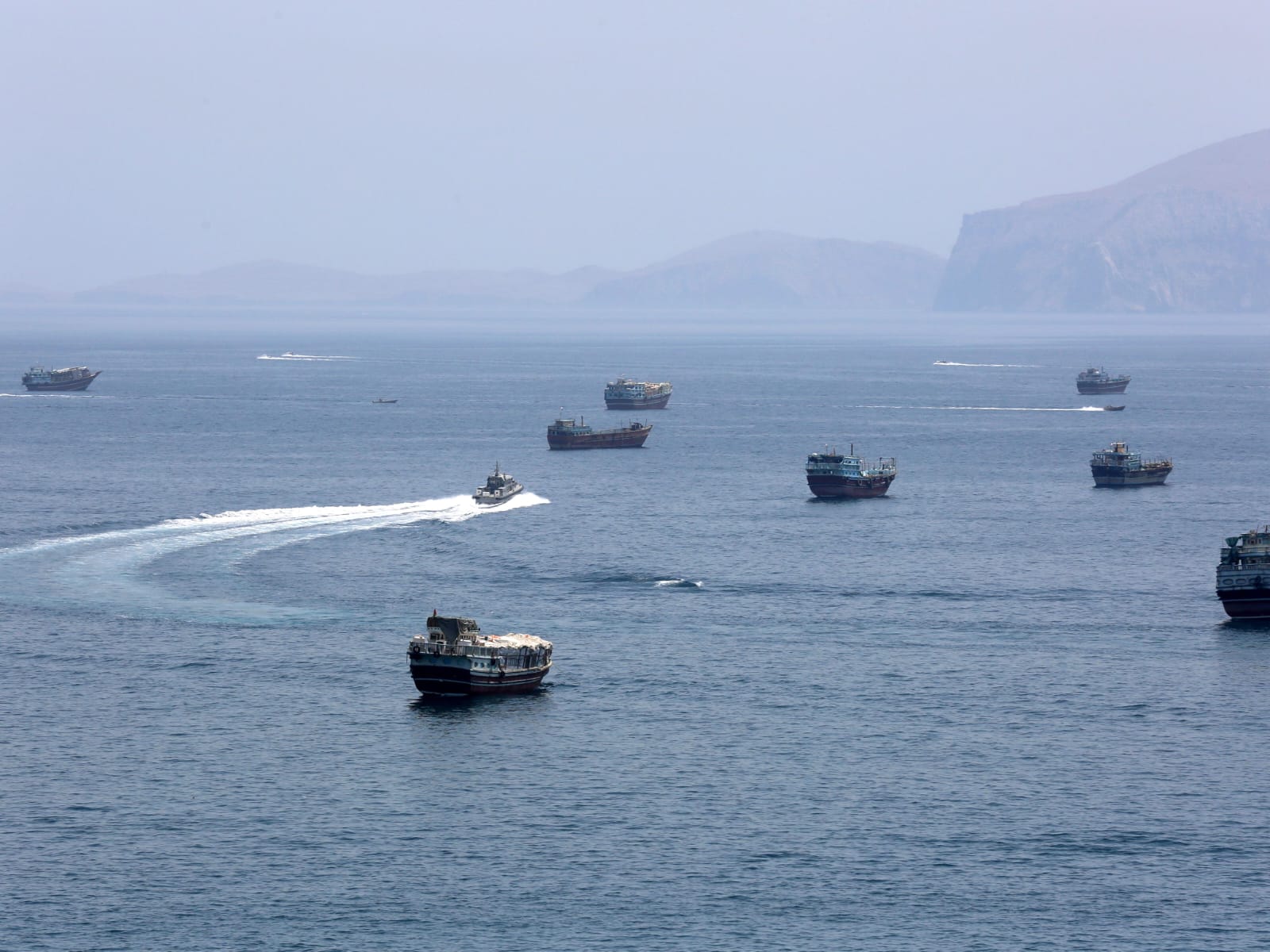
The prolonged disruption of tanker traffic through the Strait of Hormuz has once again exposed a structural vulnerability African economies know all too well. Fuel prices spike. Fertiliser costs climb. Logistics chains fray—even as the continent sits atop substantial reserves of oil, gas, and critical minerals. Four years after the Russia-Ukraine war delivered a similar shock, the lesson remains unlearned: Africa remains a price-taker in a maritime order designed elsewhere.
What is emerging is not merely another crisis but a systemic shift. Call it the post-Hormuz era. The global energy and trade system is moving away from dependence on a single chokepoint toward a polycentric network of corridors—Hormuz and Bab al-Mandeb, the Red Sea and Suez, the Mozambique Channel, the Cape of Good Hope, the Western Indian Ocean, and potentially Arctic routes. In this new configuration, Africa is no longer a peripheral supplier of raw materials. Its geography places it at the centre of several decisive arteries of the world economy. The question is whether the continent will occupy that position as a strategic subject or remain an object of other powers’ calculations.
The Enduring Problem of Thalassophobia
For decades, African strategic culture has treated the sea primarily as a boundary rather than a domain of power. The formative experiences of post-independence elites—liberation wars, civil conflicts, coups, and border disputes—were terrestrial. Maritime space received scant attention in doctrine, budgets, or elite imagination. The result is what might be called strategic thalassophobia: a deep-seated preference for land-centric security and a corresponding reluctance to invest political capital in the ocean.
This posture is reinforced by several structural factors. Sovereignty remains sacrosanct. The Organization of African Unity, and later the African Union, enshrined the inviolability of colonial borders as a foundational principle. A serious common maritime policy, however, requires sharing jurisdiction over exclusive economic zones, intelligence, rules of engagement, and command authority—precisely the prerogatives states are least willing to pool.
Interests diverge sharply across Africa’s maritime façades. Piracy, oil theft, and illegal fishing dominate the Gulf of Guinea. Trafficking and illegal, unreported, and unregulated fishing shape the Western Indian Ocean. Migration and search-and-rescue pressures define the Mediterranean. Forging a single continental agenda from these varied threats is politically costly. Fragmentation becomes the path of least resistance.
Capability and cost compound the difficulty. Building naval, coast-guard, surveillance, and logistical capacity is expensive. Maritime security is a classic collective good, inviting free-riding. External powers have filled the vacuum with bases, bilateral agreements, and international missions. The resulting functional dependence further discourages the hard work of building endogenous capacity. Meanwhile, political elites often extract greater rents from bilateral relationships with external powers than from regional integration, while internal security crises continually crowd maritime priorities off the agenda.
Paper strategies exist. The African Union’s 2050 Africa’s Integrated Maritime Strategy and the African Charter on Maritime Security and Safety remain largely unimplemented or under-ratified. The gap between declared ambition and lived practice is the clearest measure of the problem.
Geography as Opportunity
In the post-Hormuz landscape, that gap becomes a strategic liability Africa can no longer afford. The continent’s resources—hydrocarbons, minerals essential to the energy transition, and a unique position linking the Atlantic, Indian Ocean, and Mediterranean—do not automatically translate into autonomy. Autonomy requires the capacity to shape the corridors that move those resources and to capture more of the value they generate.
A polycentric maritime order raises the premium on reliable alternative routes and resilient logistics. The Cape route, the Mozambique Channel, and the Western Indian Ocean gain importance precisely when traditional chokepoints are contested or congested. Africa’s ports, shipping lanes, and coastal states sit astride these alternatives. If the continent continues to treat its seas as passive transit zones for external powers, it will forfeit the leverage that geography now offers.
Energy resilience is central. Many African producers still export crude and import refined products, rendering them vulnerable to disruptions at distant chokepoints. Expanding refining capacity, strategic storage, and regional product trade would convert resource wealth into greater insulation from external shocks. Linking maritime corridors to the African Continental Free Trade Area would further treat ports and shipping lanes as the physical backbone of continental integration rather than mere export outlets.
Building Geopolitical Consciousness and Capability
Transforming opportunity into agency begins with a change in perception. The sea must be understood not as a frontier or a space of external intervention, but as a primary arena for the projection of African power. That intellectual shift must then be institutionalised: budgets, command structures, academies, and industrial capacity must follow.
Leadership is unlikely to emerge solely from continental bureaucracy. A more realistic path runs through a coalition of anchor states with genuine maritime weight and political will—South Africa, Nigeria, Egypt, Morocco, Kenya, Angola, Senegal, and others—working through regional economic communities and specialised mechanisms. The Yaoundé Architecture in the Gulf of Guinea offers a proven, endogenous model: coordination centres, information sharing, and joint action that demonstrably reduced piracy. Similar functional arrangements can and should be extended to the Western Indian Ocean and the Mozambique Channel.
Concrete priorities follow. Existing legal instruments must be ratified and operationalised. Shared maritime domain awareness—fused satellite and radar intelligence, interoperable coast guards, joint patrols, and embarkation agreements—must be built. Financing should be anchored in African resources, including a dedicated maritime security fund linked to the African Development Bank, reducing dependence on external donors. Maritime effort must be articulated with the AfCFTA so that ports and corridors serve continental value chains. Energy resilience requires investment in refining and storage. Finally, the continent must develop its own human and industrial maritime capital: academies, hydrography, ship repair and shipbuilding, flag registries, and indigenous marine insurance. Value that currently leaks offshore can be retained.
Geopolitical consciousness is real only when it appears in funded institutions, executed budgets, and operational commands—not in another strategy document awaiting ratification.
Subject, Not Object
The post-Hormuz era is not a threat to Africa; it is its most significant contemporary window of opportunity. Geography and resources have already assigned the continent a place in the emerging order of maritime corridors. Whether Africa occupies that place as the subject of its own history or remains the object of others’ strategies depends on the choices made now.
The alternative is familiar: continued vulnerability to distant shocks, persistent outsourcing of security, and the quiet acceptance of a peripheral role in a system whose arteries run along African coasts. The more ambitious path—building genuine maritime capacity, overcoming thalassophobia, and treating the sea as a space of power—requires political courage, financial commitment, and a willingness to share sovereignty where the collective interest demands it. That path is difficult. It is also the only route by which Africa can convert its geographic centrality into lasting strategic autonomy.