


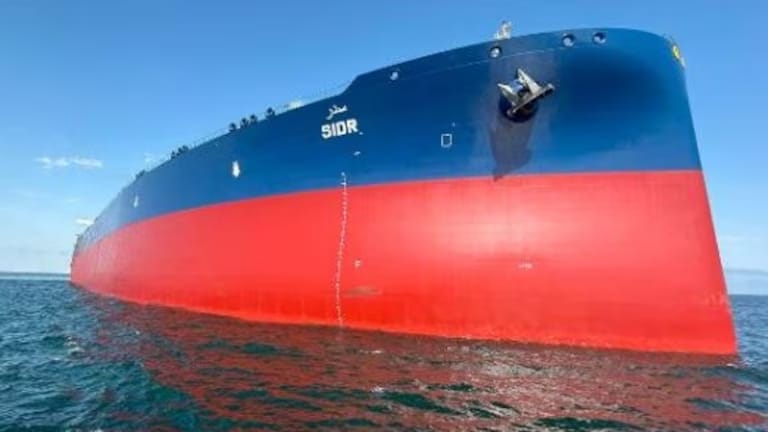
On 31 August 2026, two Filipino seafarers lost their lives when the vessel Sidr came under attack while transiting the Strait of Hormuz. Within days, the Philippines’ Department of Migrant Workers (DMW) issued a stark reminder: Filipino crew members have the right to refuse voyages through high-risk maritime areas, and shipowners and manning agencies must respect that choice. Deployment will not be permitted where a seafarer exercises this right.
This is not a new principle. It is a firm reiteration of long-standing Philippine policy, rooted in Department Order No. 01 (2024) and subsequent advisories that align with the International Bargaining Forum (IBF) and International Transport Workers’ Federation (ITF) designations of warlike and high-risk zones. The latest statement—triggered by fresh blood in one of the world’s most critical chokepoints—simply underscores what should already be operational reality: no Filipino seafarer should ever be compelled to sail into known danger.
The Strait of Hormuz is not an abstract risk. It is a narrow waterway through which roughly a fifth of global oil trade passes. Heightened tensions in the Middle East have turned commercial shipping into a direct target, with attacks, seizures, and near-misses becoming recurrent events. The DMW has already designated the Persian Gulf, Strait of Hormuz, and Gulf of Oman as warlike operations areas, with similar designations covering parts of the Red Sea, Gulf of Aden, and Black Sea. These are not theoretical maps; they are places where seafarers have already died.
Philippine policy is unambiguous. Seafarers must receive comprehensive information about the security situation before any voyage through such areas, and they must be able to give—or withhold—informed consent. Those who refuse must be repatriated without delay, without discrimination, and without blacklisting. Those who consent are entitled to enhanced security measures, rigorous risk assessments, possible escorts, transparent reporting, and the additional compensation that war-risk service requires. Shipowners who ignore these obligations face investigation and potential sanctions.
Yet the gap between policy and practice remains dangerously wide. Past incidents have revealed cases where Filipino crews were not properly consulted before vessels entered high-risk zones. Some seafarers have reported experiencing pressure, incomplete briefings, or the quiet threat of lost future employment. When two more Filipinos die in Hormuz, reiterating these rights is necessary but insufficient. Rights only protect if they are enforceable at the point of decision—on the bridge, in the manning office, and in the contracts that bind both parties.
The stakes are structural. The Philippines supplies a substantial share of the world’s merchant seafarers, and Filipino ratings and officers keep global trade moving. When those seafarers are treated as expendable, the entire system reveals its moral and operational weakness. Flag states, charterers, and classification societies can issue guidelines; P&I clubs can adjust premiums. But the seafarer is the one who cannot leave the ship once it has entered the danger zone. The right to refuse is therefore not a labor privilege; it is a fundamental recognition of human agency in an industry that still depends on human presence.
Critics will argue that unrestricted refusal rights create operational uncertainty, raise costs, and encourage “forum shopping” by crews. These concerns are real but secondary. Commercial shipping already prices war risk through additional premiums, armed guards, and route diversions. The cost of respecting a seafarer’s decision not to sail is far lower than the human, reputational, and legal toll of a fatal attack followed by public scrutiny over whether consent was genuine. Moreover, the DMW’s framework does not ban transit; it conditions it on informed, voluntary participation and verifiable safeguards. That is a measured approach, not an absolute prohibition.
The deeper issue is a severe power imbalance. Manning agencies sit between shipowners and seafarers, and their commercial incentives can conflict with protective duties. When a principal demands a crew for a Hormuz transit and the agency fears losing the contract, the pressure flows downward onto the individual who can least absorb it. Effective enforcement therefore requires much more than statements. It demands routine audits of consent processes, transparent reporting of refusals and repatriations, and swift administrative action against agencies that treat the right to refuse as optional. Recent cases where seafarers who invoked this right were successfully repatriated prove that the system can work when political will is present.
Looking ahead, regional instability is unlikely to ease quickly. As long as commercial vessels remain soft targets in contested waters, the demand for seafarers willing to accept elevated risk will persist. The proper response is not to normalize that risk or erode the right to refuse. It is to treat the right as non-negotiable, to make information and consent genuine rather than formalistic, and to ensure that those who sail into danger do so with eyes open, proper protection, and fair compensation.
The deaths aboard the Sidr are a grim reminder that policy statements arrive too late for the people already at sea. The DMW’s reiteration is welcome and necessary. What matters now is whether shipowners, manning agencies, and the broader industry treat the right to refuse as an operational constraint rather than a public-relations talking point. Filipino seafarers keep the world’s commerce afloat. They should not have to die to prove that their safety is non-negotiable.