


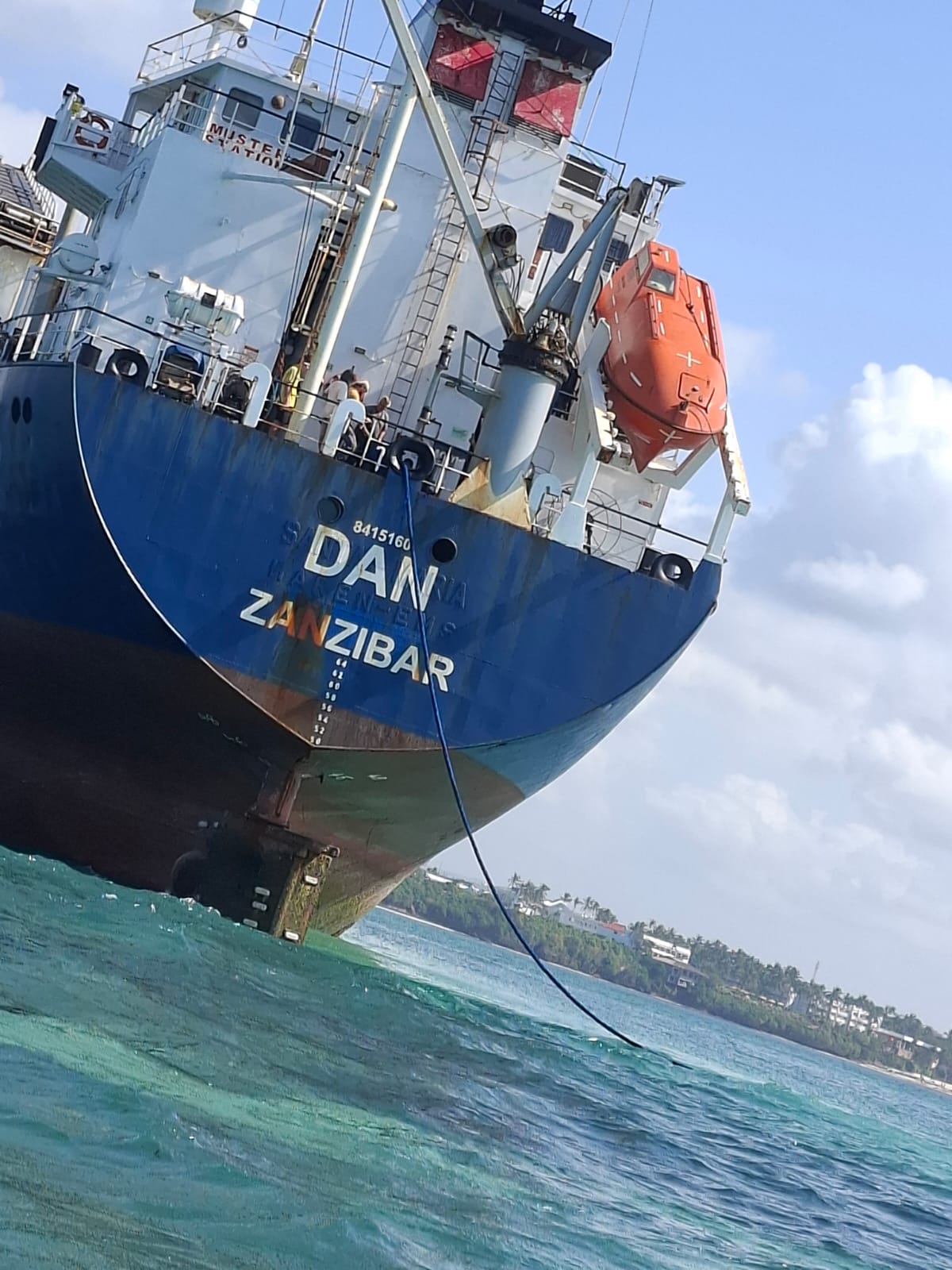
Tanzania’s dual maritime legal framework has created a structural vulnerability that now damages the nation’s international standing, endangers seafarers, and raises costs for legitimate shipping. The Merchant Shipping Act governs the mainland, while the Maritime Transport Act applies exclusively to the semi-autonomous islands of Zanzibar. Because maritime affairs are non-union matters, the Tanzania Shipping Agencies Corporation (TASAC) administers the mainland registry under a closed system that does not permit an open registry. Zanzibar’s registry, managed by the Zanzibar Maritime Authority (ZMA) under the Maritime Transport Act, has filled the gap by registering foreign vessels.
Between 2020 and 2024, the ZMA reported registering more than 800 international ships. Officials have presented this activity as a useful source of revenue and employment. The short-term gains, however, have come at a steep and growing price. The absence of robust control, coordination, and enforcement mechanisms has allowed substandard vessels to operate under the Tanzanian flag. The result is a flag state now ranked among the highest-risk in the world by every major port state control regime.
The Paris Memorandum of Understanding—bringing together 27 maritime authorities and the European Commission—has classified Tanzania as a “very high-risk” flag state, one of only three countries in that category alongside Cameroon and Comoros on the 2025 performance lists based on 2023–2025 data. The Tokyo MOU, covering more than 20 Asia-Pacific authorities, ranks Tanzania as the second-highest risk-performing flag after Cameroon. The United States Coast Guard places Tanzania in its high-risk category together with Bolivia, Curaçao, Vanuatu, Comoros, Latvia, and Togo.
Being flagged negatively by three separate inspection regimes places Tanzania among the worst-performing flag states globally, in the company of Togo and Belize. Tanzania is also reported as the second-highest country worldwide for cases of seafarer abandonment, after Panama. These rankings are not abstract bureaucratic scores. They translate directly into more frequent and intensive port state control inspections, higher insurance premiums, greater operational friction, and reduced commercial attractiveness for any vessel flying the Tanzanian flag.
The human cost is equally serious. High-risk flags correlate with poorer working conditions, delayed or unpaid wages, and inadequate maintenance. Seafarer abandonment cases leave crews stranded far from home without pay, food, or medical care while the flag state fails to discharge its responsibilities under the Maritime Labour Convention. Each such incident further erodes trust in the Tanzanian flag and reinforces the perception that the registry prioritises fee collection over safety, security, and welfare.
Zanzibar’s desire for revenue is understandable. An international registry can generate registration fees and create limited local employment opportunities linked to administration and training. Yet the evidence shows that an open or lightly regulated registry without effective oversight becomes a magnet for operators seeking the path of least resistance. Substandard ships, vessels involved in illicit trade, and owners who treat the flag as a disposable convenience all gravitate toward jurisdictions that offer low barriers and weak enforcement. Tanzania has already experienced episodes of reflagging scandals, detentions, and vessels linked to illegal cargoes. The pattern is not new; it is the predictable outcome of prioritising volume over quality.
Reform is both necessary and feasible. First, the United Republic and the Revolutionary Government of Zanzibar must establish clear, coordinated mechanisms for oversight of the international registry. Shared standards, joint audits of recognised organisations, and transparent performance metrics would reduce the current fragmentation. Second, the ZMA should tighten eligibility criteria, strengthen continuous monitoring, and move decisively against vessels with repeated detentions or abandonment records—actions already foreshadowed in recent circulars on post-detention procedures and mandatory insurance. Third, Tanzania should treat flag-state performance as a national reputation issue rather than a purely Zanzibari revenue matter. The flag belongs to the United Republic; the damage accrues to the whole country.
Port state control regimes exist precisely because flag states sometimes fail. When a country consistently appears at the bottom of the performance lists, the international community responds with heightened scrutiny and higher costs. Tanzania does not need to abandon the possibility of an international registry. It needs to decide whether that registry will be a credible instrument of maritime governance or a residual flag of convenience. The current trajectory—hundreds of foreign vessels registered, persistently poor performance rankings, and elevated abandonment statistics—demonstrates that revenue without rigorous control is a false economy.
A well-regulated Tanzanian flag could contribute to the blue economy, support seafarer training, and project national competence. A poorly controlled one will continue to attract substandard tonnage, damage the country’s standing, and impose higher costs on legitimate operators. The choice is not between revenue and reputation; it is between short-term fees and long-term credibility. Tanzania’s maritime authorities, both on the mainland and in Zanzibar, still have time to choose the latter.