


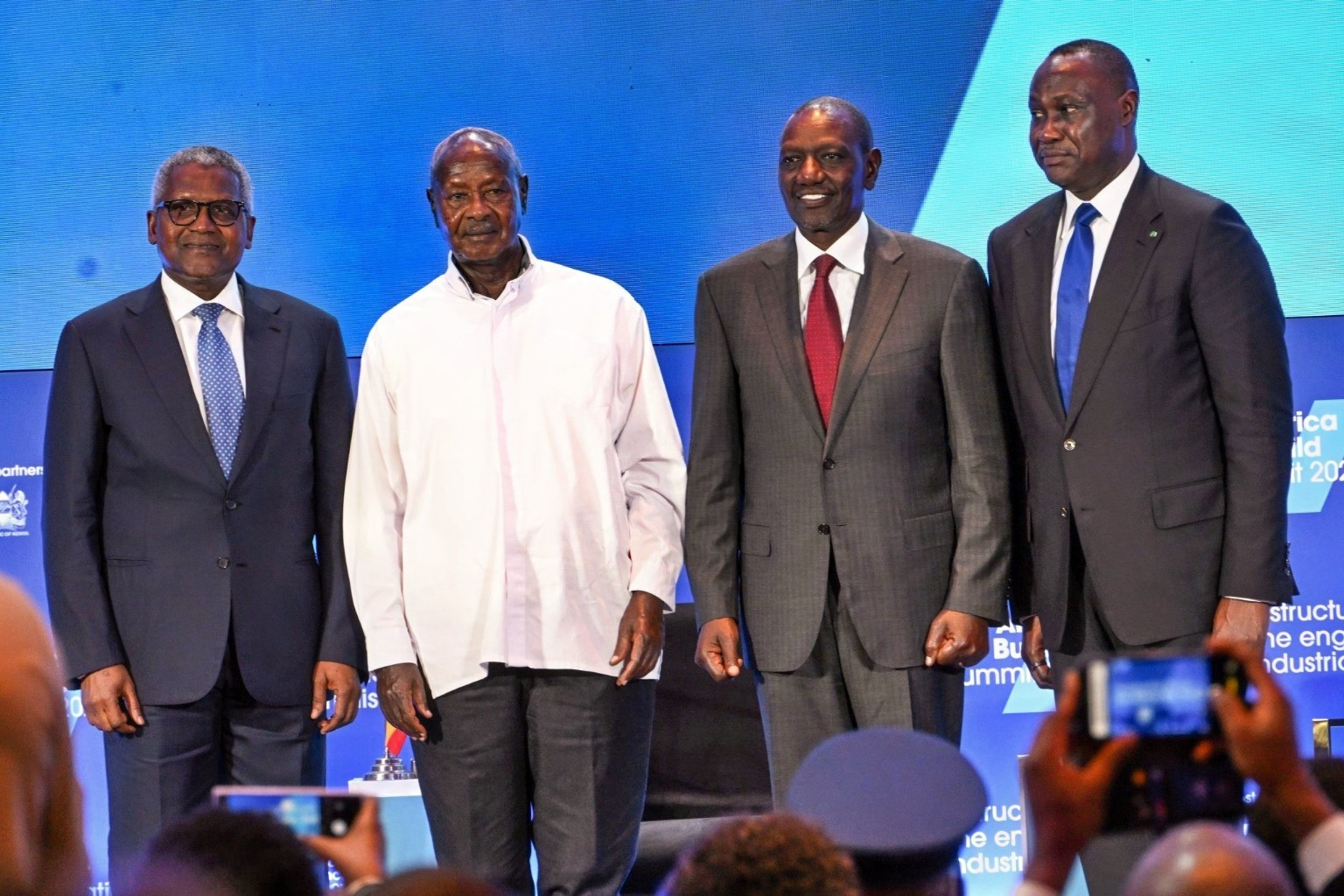
President Paul Kagame’s recent confirmation that Rwanda is in early talks for a stake in Aliko Dangote’s planned oil refinery in Lamu, Kenya, is more than a quiet investment signal. It is a revealing moment in East Africa’s scramble for energy sovereignty, corridor dominance and strategic autonomy. While Tanga in Tanzania sits geographically closer to several landlocked markets and was once floated as the preferred site, Kigali has fixed its gaze on Lamu. That choice deserves careful scrutiny.
The facts are now reasonably clear. Dangote Group has selected Lamu for a roughly 700,000-barrels-per-day refinery estimated at $16–20 billion when petrochemical and port infrastructure are included. Kenya has been offered a 10 percent stake valued at about $500 million. Ethiopia and Rwanda have been invited into a broader regional package that could total around $1.5 billion for a combined 30 percent equity. Kagame, speaking in Kigali on 24 August 2026, described the conversations as real but early: “What I can say is that Rwanda would be very happy to be part of that kind of investment.” He committed to nothing concrete, yet the political signal was unmistakable.
This matters because geography alone does not dictate commercial or strategic logic. Tanga is nearer to Uganda’s oil fields via the East African Crude Oil Pipeline corridor and sits on a coastline that could theoretically serve both the East African Community and parts of the Southern African Development Community. Earlier this year, Kenyan President William Ruto publicly named Tanga as a possible site in the presence of Ugandan President Yoweri Museveni, only for Tanzanian President Samia Suluhu Hassan to object that she had not been consulted. The diplomatic friction was real and public. Dangote’s team ultimately chose Lamu, citing its deep-water port capable of handling large crude tankers, existing and planned LAPSSET corridor links toward South Sudan and Ethiopia, and Kenya’s relatively faster investment climate. Tanzania and Uganda later signed a separate memorandum with Vitol Bahrain for a multi-billion-dollar energy hub in Tanga, complete with refining, storage and logistics. The region now has two competing energy visions rather than one shared project.
Rwanda’s preference for Lamu is therefore not an accident of distance. Kigali is a sophisticated reader of regional power dynamics. An equity stake in Lamu would give Rwanda a direct financial interest in a facility designed to supply fuel to Rwanda itself, Uganda, South Sudan, Ethiopia and beyond. Ownership is different from mere offtake. It creates a seat at the table on pricing, supply security and future expansion. It also aligns Rwanda with the northern corridor and LAPSSET rather than the central corridor that Tanzania has been energetically promoting. For a landlocked country that has long sought diversified access routes and reduced dependence on any single transit neighbour, Lamu offers both commercial upside and strategic insurance.
The broader context is East Africa’s chronic vulnerability. The region imports the vast majority of its refined petroleum products, spending hundreds of millions of dollars monthly and remaining exposed to global price spikes, shipping disruptions and currency pressures. A large, modern refinery on the Kenyan coast could change that equation—if it secures reliable crude feedstock (potentially from Uganda, South Sudan, Kenya and the Democratic Republic of Congo), operates competitively against imported product, and avoids the political capture that has plagued earlier regional energy projects. Dangote’s track record with the Lagos complex, now the largest single-train refinery in Africa and expanding further, gives the Lamu proposal credibility that pure government-led schemes have often lacked.
Yet the politics remain messy. Ruto’s early public embrace of Tanga without clear Tanzanian buy-in illustrated how quickly regional “solidarity” projects can become sources of friction. Museveni’s parallel focus on Uganda’s own Hoima refinery plans and the separate Tanga energy hub with Tanzania show that Kampala is hedging rather than fully committing to Lamu. Ethiopia’s interest adds another layer of complexity, given its own energy ambitions and the unfinished LAPSSET infrastructure. Rwanda’s measured enthusiasm—happy to participate, details still fluid—reflects a characteristic caution: secure the option without over-committing before the commercial and political architecture solidifies.
Critics will argue that multiple competing refineries and hubs risk fragmenting the market, diluting offtake volumes and raising the cost of capital for everyone. They have a point. East Africa does not need three half-built energy complexes; it needs one or two that actually work. Supporters counter that competition itself is healthy, that Dangote’s private capital and operational experience reduce the risk of the white-elephant syndrome that has haunted previous mega-projects, and that equity participation by governments converts passive consumers into stakeholders with skin in the game.
For Rwanda specifically, the Lamu option also carries domestic political logic. Kagame’s government has prioritised infrastructure, logistics and industrialisation as engines of growth. Taking a stake in a major regional energy asset fits that narrative. It signals that Kigali is not content to remain a price-taker in fuel markets. And it keeps open the possibility of future supply arrangements that could serve Rwanda’s manufacturing and transport sectors more reliably than the current import-dependent model.
The real test will come in the next 12–18 months. Will the equity offers convert into binding commitments and capital? Will crude supply agreements materialise at volumes and prices that make the economics work? Will Lamu’s supporting infrastructure—port, roads, power, environmental safeguards—keep pace? And will the parallel Tanga initiative evolve into complementary capacity or zero-sum rivalry?
Kagame’s interest in Lamu rather than the geographically closer Tanga is a reminder that in East African energy politics, proximity is only one variable. Access, ownership, corridor politics, institutional reliability and the quality of the commercial partner matter more. Rwanda is placing a calculated bet that Lamu, under Dangote’s leadership and with Kenyan and Ethiopian co-investors, offers the better combination of those factors. Whether that bet pays off will shape not only Rwanda’s fuel security but the broader architecture of East African energy for a generation.
The region’s leaders now face a choice: treat the Lamu and Tanga projects as competing national trophies, or find ways to coordinate so that East Africa finally builds refining and logistics capacity commensurate with its needs and resources. Rwanda has signalled where it leans. The rest of the region should take note.