


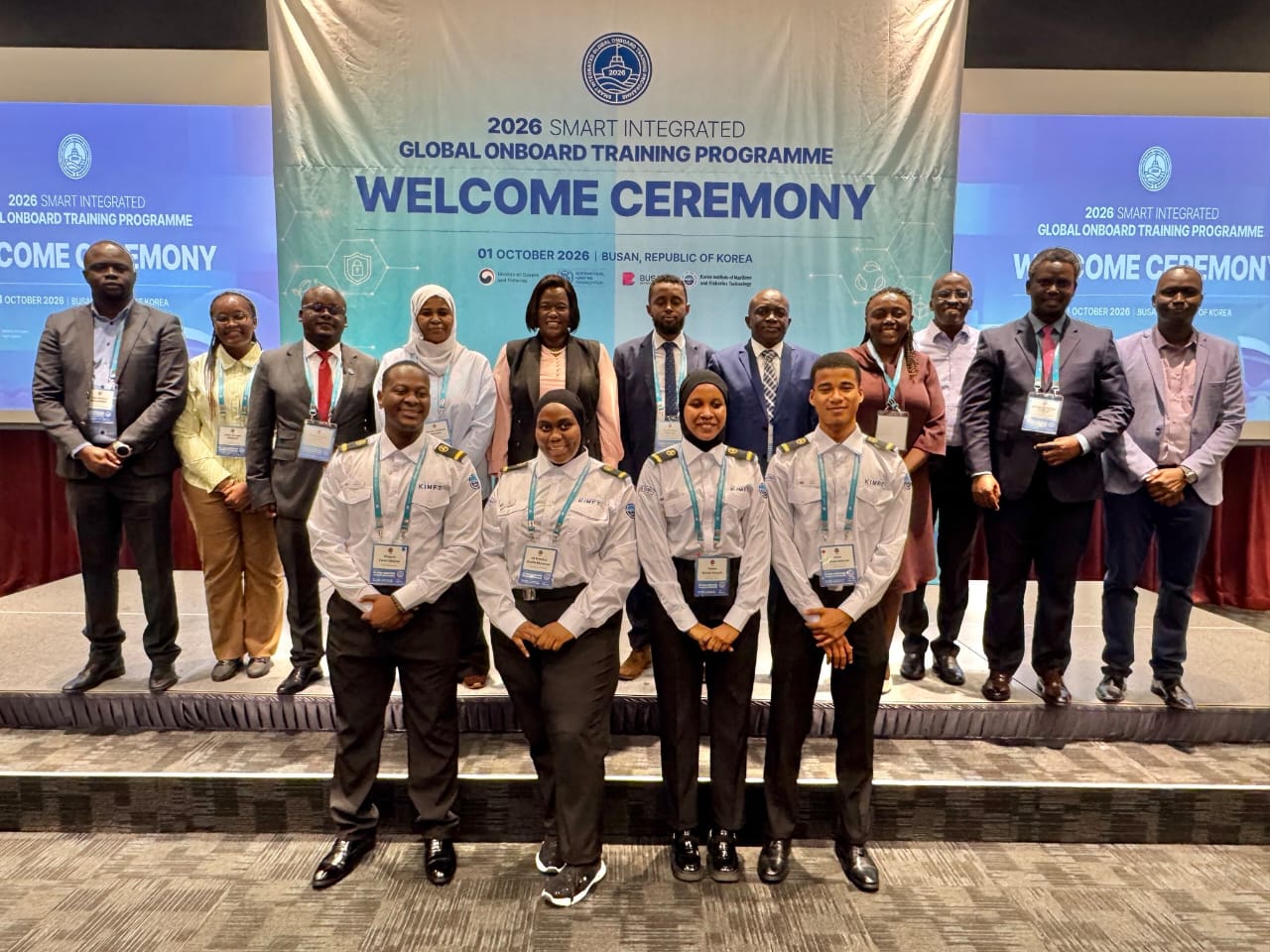
Kenya has the coastline, the policy ambition, and the institutions. What it lacks is a disciplined pipeline from classroom to ship.
Kenya sits on one of the most strategically valuable stretches of coastline in the Western Indian Ocean. With a 640-kilometre shoreline, an Exclusive Economic Zone (EEZ) rich in marine resources, and major ports at Mombasa and Lamu, the country has long spoken of the Blue Economy as a pillar of Vision 2030 and a pathway out of youth unemployment. Yet the gap between aspiration and reality remains stark. Africa produces only about 2 percent of the world’s seafarers, and Kenya’s contribution remains modest relative to its ambitions. The decisive variable is not another policy document or port expansion. It is the systematic development of maritime human capital through high-quality education, training, and placement of seafarers.
Dr. Juliet Wangui Wamugi’s work sits at the precise intersection of this challenge. A maritime safety and education specialist with a PhD from Korea Maritime and Ocean University, her research on ferry accident causation, human factors, and systems-theoretic approaches to maritime risk in Kenyan waters underscores a simple truth: safety, competence, and employability are inseparable. Without rigorous, internationally aligned maritime education and training (MET), Kenya cannot safely scale its Blue Economy or capture global demand for qualified seafarers.
The Scale of the Opportunity—and the Skills Bottleneck
Global shipping still moves roughly 80 percent of world trade by volume. The industry faces a structural shortage of officers and ratings even as it navigates decarbonisation, digitalisation, and tighter safety regimes under the International Maritime Organization (IMO). Countries that have treated seafarer training as a national industry—the Philippines, India, China, and increasingly Ethiopia—have turned maritime labour into a major source of foreign exchange and soft power. Kenya’s government has set ambitious targets, including training tens of thousands of seafarers and placing many more into employment through programmes such as Vijana Baharia. Bandari Maritime Academy and other institutions have expanded capacity, reduced the cost of certain Standards of Training, Certification and Watchkeeping (STCW) courses, and pursued partnerships for sea-time and placements. Progress is real, but the pipeline from classroom to ship remains too narrow and too fragile.
The constraints are well documented. Sea-time opportunities—the practical experience required for certification—are scarce. Many graduates struggle to secure the berths needed to complete their qualifications. International recognition of Kenyan certificates is improving but not yet automatic in every market. Gender inclusion remains limited; women constitute a tiny fraction of active seafarers worldwide and an even smaller share in African fleets. Coastal communities that depend on artisanal fisheries and small-scale maritime livelihoods often lack clear pathways into formal, higher-value maritime careers. Meanwhile, the Blue Economy conversation sometimes prioritises infrastructure and resource extraction over the people who will operate, regulate, and innovate within those systems.
Why Maritime Education Must Move to the Centre
High-quality MET does more than produce deck officers and marine engineers. It builds the broader ecosystem of pilots, surveyors, port managers, logistics professionals, safety auditors, and maritime educators that a modern Blue Economy requires. It also embeds a safety culture. Wamugi’s research on domestic ferry operations in Mombasa and Likoni, and on human-factor failures in cargo operations, shows how systemic weaknesses—communication breakdowns, inadequate procedures, and insufficient training—translate into preventable accidents. A Blue Economy that expands traffic without commensurate investment in competence is simply transferring risk onto coastal communities and seafarers themselves.
Successful models elsewhere offer clear lessons. Ethiopia’s Maritime Training Institute scaled rapidly by aligning curricula tightly with international standards, securing placement pathways, and treating seafarer development as an export industry. Kenya already possesses strong institutional foundations—Bandari Maritime Academy, Technical University of Mombasa, Kenya Coast National Polytechnic, and others—and has begun important work on recognition of prior learning and competency-based training. The next leap requires three coordinated shifts.
First, close the sea-time gap through deliberate partnerships with international shipping lines, national fleet development, and structured cadet programmes. Without guaranteed practical experience, theoretical training produces certificates that do not convert into careers. Second, treat MET as a strategic national industry rather than a subset of technical education. This means sustained public investment, performance-based funding tied to placement rates and international recognition, and active diplomacy to secure bilateral agreements that open berths and employment for Kenyan seafarers. Third, design inclusion into the system from the start—targeted scholarships and support for women and youth from coastal counties, modular pathways that recognise informal maritime experience, and curricula that prepare graduates not only for traditional deep-sea roles but also for emerging Blue Economy occupations in aquaculture, offshore renewables, marine conservation, and digital maritime services.
From Policy Rhetoric to Measurable Outcomes
Kenya’s Blue Economy strategy correctly identifies human capital as central. The test is whether implementation matches the rhetoric. Success should be measured not by the number of training certificates issued, but by the number of Kenyan seafarers actively employed on international and regional vessels, the volume of remittances they generate, the reduction in maritime accidents attributable to human factors, and the growth of a domestic cadre of maritime educators and researchers capable of sustaining the system.
The alternative is familiar: ports expand, fisheries are commercialised, and foreign crews continue to dominate the higher-value segments of the value chain while Kenyan youth remain on the quay. That outcome is not inevitable. With focused investment in maritime education, rigorous attention to safety and competence, and deliberate pathways from training to employment, Kenya can turn its geographic advantage into a genuine human-capital advantage. The Blue Economy will not deliver transformative growth through infrastructure alone. It will deliver it through the men and women who are trained, certified, and trusted to operate safely at sea.
Dr. Wamugi’s scholarship reminds us that maritime systems fail or succeed as socio-technical wholes. The same principle applies to national strategy. Kenya has the coastline, the policy ambition, and the institutional base. What it needs now is the disciplined, sustained commitment to produce the seafarers and maritime professionals who will actually sail the Blue Economy into the future.