


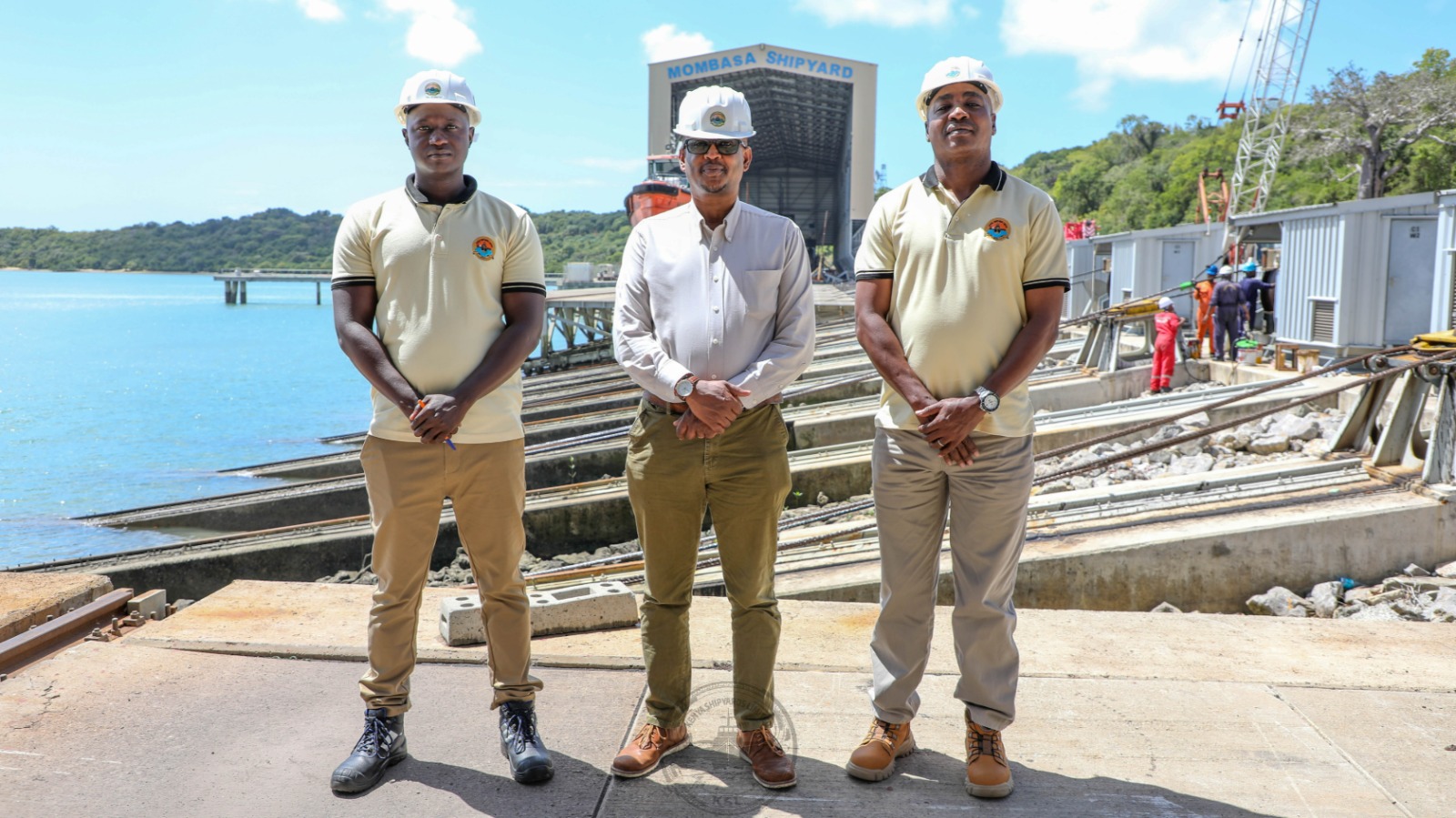
Elijah Mbaru’s recent visit to Kenya Shipyards Limited was more than a courtesy call. It was a signal that Kenya is ready to claim a larger role in the maritime value chain that has long bypassed East Africa. The conversations around ICS, BIMCO, FONASBA, Lloyd’s Register and port operators, especially on dry docking, point to a clear opportunity: transform a capable regional yard into a destination that global shipowners and operators actively choose.
For decades, vessels operating along the East African coast and the western Indian Ocean have routinely steamed to Europe or Asia for routine and special surveys, hull work and machinery overhauls. The costs in time, fuel and foreign exchange have been substantial. East Africa’s existing repair capacity is thin and frequently fully booked. Kenya Shipyards Limited, with its modern Mombasa slipway capable of handling vessels up to roughly 4,000 tonnes and 150 metres, specialised workshops and growing commercial track record, is already changing that reality for regional operators. Tanzanian ferries and local port assets have docked successfully. Turnaround times have improved. Confidence is building.
That confidence must now be scaled. Global players do not select yards on goodwill alone. They select on predictable quality, class-society acceptance, commercial clarity and total cost of downtime. This is precisely where engagement with the institutions Mbaru explored becomes decisive. Alignment with BIMCO contracts and clauses removes ambiguity. Recognition by classification societies such as Lloyd’s Register reassures technical managers and underwriters. Relationships with FONASBA members—the agents who actually arrange the calls—open the practical pipeline. Dialogue with the International Chamber of Shipping places Kenya on the radar of the owners who control the majority of the world’s fleet.
Kenya holds genuine advantages. Location near the Port of Mombasa places the yard on major trade routes. Labour and positioning costs are competitive. Multi-shift operations and defence-to-commercial skills transfer can deliver faster schedules than many private yards. Government backing for the blue economy provides policy continuity that private investors notice. These are not abstract assets; they are concrete reasons an owner of a mid-sized vessel trading East Africa–Indian Ocean routes should prefer Mombasa over a more distant and expensive alternative.
Yet advantages alone are insufficient. Capacity must expand selectively so larger vessels become viable. Certifications and safety systems must meet international scrutiny without compromise. Supply chains for critical spares need resilience. Pricing and variation processes must be transparent. First-time clients must leave as advocates. Partnerships with established international yards for technology transfer and process benchmarking will accelerate this journey more effectively than isolation.
The prize is significant. Capturing even a modest share of the dry-docking demand that currently leaves the region would retain foreign exchange, create skilled employment, deepen technical capability and strengthen Kenya’s position as a maritime services hub. It would also support the broader African ambition of moving from pure transit corridor to value-adding industrial participant under frameworks such as the AfCFTA.
Kenya Shipyards Limited has already proven it can deliver for regional clients. The next step is deliberate, standards-driven engagement with the global institutions that shape owner decisions, combined with disciplined investment in capacity, quality and commercial professionalism. The visit by Elijah Mbaru should be treated as the opening of a strategic campaign, not a one-off exploration. If Kenya acts with focus and consistency, Mombasa can become a trusted name on the dry-docking shortlist of international operators. That outcome is both achievable and necessary for a country serious about its blue-economy future.
The steel is already in the water. The question is whether Kenya will claim the work that belongs closer to home—and the global confidence that follows.