


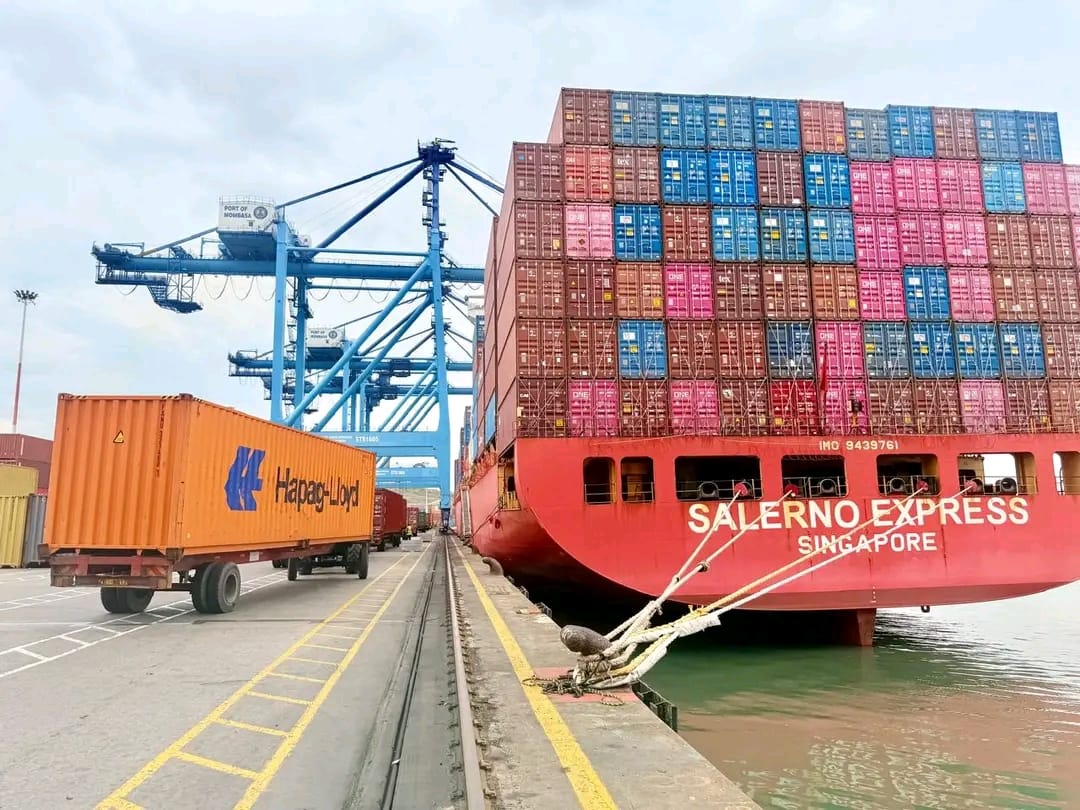
The headlines from the latest Kuehne+Nagel operational report tell a comforting story for East Africa: Mombasa is holding the line. As Beira chokes on a 9.71-day average vessel wait and Durban struggles at 7.54 days, Kenya’s main gateway appears to be the rare functioning node in a continental supply chain under strain . For a clearing agent in Mombasa, the relative fluidity of the berth is a welcome contrast to the chaos further south.
But this narrative of Mombasa’s resilience obscures a harder truth. The port’s relative speed is not a sign of regional health; it is a symptom of a fragmented and under-integrated maritime system where one port’s temporary advantage masks the structural fragility of the whole. Celebrating Mombasa’s shorter queues while Beira and Durban burn is like praising a lifeboat while ignoring the sinking ship. Africa’s logistics crisis is not a port-by-port problem to be managed; it is a systemic failure of connectivity, infrastructure, and coordination that requires a radically different response.
The Anatomy of the Divergence
The data from late October and early November 2026 is unambiguous. Beira’s crisis is acute, driven by a combination of terminal recovery efforts and adverse weather that has left the port in a state of “critical” condition . Durban’s malaise is deeper and more structural: two cranes on long-term breakdown at Pier 1, vessel bunching, and peak-season import surges have created a backlog that has forced major carriers like COSCO and Maersk to adjust rotations and divert calls . The result is a feedback loop where landside congestion and equipment failures cascade into marine delays, pushing shipping lines to seek alternatives.
Mombasa, by contrast, has benefited from a combination of geography and recent operational focus. Its ability to maintain faster turnarounds has made it a relative beneficiary of diverted cargo and heightened attention from shippers desperate to avoid the southern bottlenecks. But this advantage is precarious. Earlier in 2026, Mombasa itself was grappling with yard congestion, with stakeholders calling for a temporary halt to port clearance to decongest the facility . The port’s current breathing room is a function of comparison, not of a fundamentally superior system.
The Cost of Fragmentation
The danger of the current narrative is that it encourages a complacency that treats port performance as a competitive sport rather than a collective public good. When Durban sneezes, Mombasa may catch a cold—or, worse, be overwhelmed by a surge it cannot handle. The diversion of cargo from Durban to alternative gateways is not a sustainable equilibrium; it is a stress test that exposes the lack of redundancy in the regional network . Shippers who reroute through Mombasa or Dar es Salaam do so out of necessity, not preference, and they carry with them a volatility that can quickly overwhelm a port operating near its capacity.
Moreover, the focus on vessel waiting times obscures the downstream costs that ripple through the economy. Congestion at Beira and Durban does not just delay ships; it inflates freight rates, disrupts inland supply chains, and ultimately raises the cost of goods for consumers across Southern and East Africa. The clearing agent’s observation that “early updates help everyone prepare” is a coping mechanism, not a solution . It is an admission that the system is unpredictable and that stakeholders are left to manage the fallout of failures they cannot control.
Beyond the Berth
The real lesson of the 2026 congestion crisis is that Africa’s ports cannot be fixed in isolation. The World Bank’s Container Port Performance Index consistently ranks most Sub-Saharan African ports far below global benchmarks, and the reasons are as much about what happens outside the port gate as inside it . Inefficient rail links, poor road connectivity, and border delays mean that even a port with spare berth capacity can be strangled by landside bottlenecks. Mombasa’s own experience with rail evacuation challenges earlier in the year is a case in point .
The solution, therefore, is not to celebrate Mombasa’s relative efficiency but to use it as a platform for regional integration. The African Continental Free Trade Area provides a framework, but it requires operational reality. This means investing in corridor infrastructure that connects ports to their hinterlands, harmonizing customs procedures, and creating a system where cargo can flow seamlessly across borders rather than being trapped by the inefficiencies of a single node . It means treating the ports of East and Southern Africa as a network rather than a collection of competing fiefdoms.
A Call for Coordinated Action
The clearing agent’s plea for early updates is a microcosm of what the region needs at a macro level: transparency, coordination, and a shared commitment to predictability. The shipping lines that are adjusting rotations and diverting calls are not waiting for individual ports to solve their problems; they are building new networks that may bypass the region entirely if reliability does not improve .
Mombasa’s current advantage is an opportunity, but it is a fleeting one. If Kenya and its neighbors use this moment to deepen integration, invest in corridor infrastructure, and build a genuinely coordinated regional port system, they can transform a temporary reprieve into a durable competitive advantage. If they do not, the next congestion crisis will not discriminate between Mombasa and Durban. It will simply confirm what the data already suggests: that Africa’s maritime gateways remain fragile, fragmented, and unprepared for the demands of a volatile global trading system.
The ships will keep coming. The question is whether the region will be ready to receive them—not just in Mombasa, but across the coast.